Morning Kisses (11)

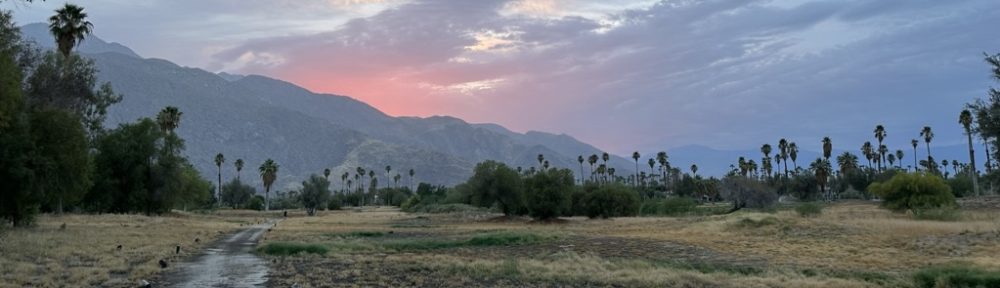
I like to wake up slow. When Sable is beside me, I turn over for morning kisses, pettings and rubbings of his soft furry face against mine. Today he takes off before kisses. Sofia comes instead. She never used to want to be touched, but now the cat she has become will present herself for affection in rare moments. (These times tend to be when I’ve just begun to work on the computer or have just sat down to dinner, and she’s pushy about it. I remind myself I don’t know how long she’ll be here because there is something about the way she invades I don’t find at all endearing.) This morning she is quiet. She gets in my face but then sits down. She lets me kiss the top of her head, stroke her cheeks. She stays for a long time. I talk to her about not hanging on for my sake, remind her to let me know when she’s ready to go. “I’ll help you go night-night,” I say. It makes me cry, good tears. I’m not open to her as often as I’d like to be, so this feels right. Then she decides to run off the bed, quick, jerky movements. She knocks my mini iPad to the floor. I yell at her. I remember I don’t want to yell at her. “Arrrgggghhhhhhhh,” I say, sotto voce, like the whisper of cheering baseball fans on the radio. But then I tell her she’s a creep. If I remembered to stop yelling, couldn’t I not call her names? Still, maybe it’s progress of a sort. I will add name-calling to the list, I think, as I walk to the door. I let the cats outside, step out into the courtyard with them. I say my little morning prayers. I try to forgive myself for yelling at Sofia (yet again). When I “come to,” when my eyes focus, I’m staring at the big waning moon just setting behind the San Jacintos. It is framed, postcard perfect, between the smooth green limbs of our Palo Verde. It makes me stop, this miracle, this affirmation of life, of magic in the world—this big gift. I stand there, grateful, and everything else seeps out of me. I watch, not moving, until she disappears behind the ridge. Goodbye, moon.

Ready to Pounce (10)

I read Natalie Goldberg’s chapter “Be an Animal” (from Writing Down the Bones). Her words surprise me. I’ve read it I don’t know how many times before, and yet it’s all new to me tonight, each image glistening and precise. She talks about how we are writers even when we are not writing. She tells us to be like the cat, all senses focused on our prey, ready to pounce. She urges us out into the world like this. It’s the way we are when we travel, I think, all the more so in a foreign country. But we can do it here, too, on our own block, across our own town. I discovered this on a Thursday when I left my car with my mechanic in Ukiah, half the day until it would be ready. I shouldered my day pack, walked across town. I came upon a small, deserted cafe, sat by the window, drank tea with half-and-half and honey. I explored the residential neighborhoods west of State Street. I stopped for giant zinnias, hummingbirds, a red front door. I stood for a long time listening to a mockingbird singing in a tall tree on a corner. I let myself move from street to street, changing directions on impulse the way I do in a strange city even though I knew Ukiah, even though it wasn’t new to me. I let it feel new. Without trying, I met it with Zen’s “beginner’s mind.” I remember coming upon a row of small businesses. The flower shop had buckets of red dahlias and yellow sunflowers sitting out on the sidewalk in the early morning shade. It woke up in me my old dream of having my own place for flowers, soup, books, the day’s used newspapers and a messy pile of paperbacks on the window seat. I used to picture myself sweeping the sidewalk in the mornings, setting up shop for the day. I loved the quiet satisfaction of the dream. That morning in my wandering I went across the street to a little park, put my pack on a bench, did my qi gong facing southwest under a big redwood. Later, I walked to the county library, went online, checked in with my students, did some grading. Ordinary things, but because I was in a strange chair breathing different air, I stayed more awake. In the heat of the summer afternoon I walked from the library to pick up my old red Jetta, my beloved Lolita Roja. I could still feel it, the mountain lion pace in me, watching, smelling, tasting the air as I walked through the streets of Ukiah.

Coyote Tears (9)

In spite of good intentions, I am late and run to the bus stop. I am grabbing adventure today, rushing off early on a Sunday morning, unheard of for me. On Sundays I like to laze around daydreaming over the “Travel” section of the L.A. Times, read my horoscope, eat scrambled eggs. Now as I hurry toward the bus stop I see a coyote in the park. She gets spooked, changes course and runs along the edge of the street behind me. When I turn to look at her she shies away. If I thought I could herd her back to safety, I would abandon my bus. But I know I would only scare her. She is running like a lost dog, hesitant, jerky. I am afraid to even look at her, afraid she will veer away from me into the path of a car. So instead I pray, loud, silent, fierce prayer that she be guided home, that she be kept safe. Please oh please. She stops near the corner, and I point down the street like the scarecrow in The Wizard of Oz. “That way would be good,” I say. She goes in the other direction, heading east. My throat hurts as she disappears. She is so lost, so tender, so very alone in this scary place. I look for her when I am on the bus, hoping she will make it, some scent will be familiar, and she will find her way. I don’t see her. The bus turns the corner, heading north, and I am sure I will not see her now. But there she is. She runs across the street in front of the bus, her panic rising. In moments we are past, and I can’t see her anymore. I cry then, big fat tears that come fast, wet my face in seconds. I turn away from people, toward the window. I push my glasses up, wipe my face with the backs of my hands, surprised and a little embarrassed. Please oh please oh please.

Hold Still (8)

This morning I read one of the last chapters in the Natalie Goldberg book. It is titled, “Blue Chair.” She comes back again to Gwen, the student and friend who died. The last line ends like this: “it comes home deeper that I don’t get to say any more; what was said, was said, though the knowledge of her death ripples long after the last stone dropped, rich and living on.” At the beginning of the chapter she is painting a big, “fat” blue chair, “the kind of chair you want to nestle in.” Read in. Write books, your legs dangling over the big arms. She describes the layers of gouache she brushes over it, color after vibrant color until the chair has texture and depth, is no one color but alive in its layered-ness. While I write, a dove sits on the neighbor’s carport, his mourning song echoing the sadness and the layers of her chapter still sinking down inside me. I have felt at times in recent years like I am waiting for all my immediate family to die. Then I will go on to the next part of my life, walk el camino de Santiago, see Greece, Africa, find my “real” home, the place I will spend the rest of my own life. I expect my cat Boo to be the last, hope he will see me through the other losses, spend more years beside me. Because he is too thin and won’t eat much, the other day I became afraid it’s all going to happen too soon, too fast. I don’t want to lose any of them. Ever. I’ve told the universe again and again over these last few years: I am in no hurry. I want to be very clear about that. I am happy to wait. A wave of big, big losses rolled through life in my twenties. Now I am poised for another. But even as I write I know I am not really waiting. I just don’t want to leave them to go do other things. I would rather stay, be nearby. Stock up on life together. I can go later in a different time after the wave has washed back out to sea. I know even though I don’t want this wave to come, it will come anyway. And writing now, I know another thing. I know I must not brace myself against it, in spite of what my past, what my instincts beg. Instead, I want to tread water beyond the breakers, keep warm, nimble. I want to stay close, be ready to launch myself into the swell of it. I want to ride it all the way to the shore, the tears on my face indistinguishable from the salty water that holds me, buoys me, carries me whole and unharmed to the warm sand at the sea’s edge, new layers of bright-colored gouache painted on my soul.

Goodbye Grackle (7)

I hear a bird who is not one of my “regulars,” and I stop sweeping, stand listening in the open doorway of my trailer home. A timid peep comes from the Palo Verde, a verdin, who also doesn’t visit often. But his is not the sound I’ve stopped for. It was someone louder. Someone is calling from the top of the electrical pole across our small road. When I walk outside to look, I can’t see anyone up there. But he keeps talking, so I go get my binoculars. I used to bring them out to the courtyard every morning, to sit beside my notebook, my pens, my small pile of books. Sometimes I would just sit and watch my regulars, my mourning doves, my house finch, my hummingbirds. But they would be handy when someone unusual showed up. It’s a habit I’d like to resurrect. Now I study the top of the pole with the binoculars. It takes a bit of time, but when I see the bird it clicks. He is a great-tailed grackle, one of my favorites. I used to talk to them when I walked in the mornings along the bike path. But now there is no water for them on the golf course, and I don’t hear them anymore. I would say they never come to our trailer park, but there he is. I watch him on the pole, glossy black, big tail waving, intense. I stand listening to his calls. I should have recognized his voice. It is the sound of the Mexican mainland to me, a return to civilization, the exotic calls both welcome and comfort. He flies off heading south. I stand at the edge of my courtyard and watch him fly away. It feels like he came to visit me. Warm tears push at the corners of my eyes. And now the moon is in the south, too, a thin waning sickle in our pale blue sky. I breathe and settle. Goodbye, grackle. Hello, moon.

Too Many Lonely Dogs (5)

I read in the newspaper there is now a “movement” to have one day each week free from technology. (It also said most people in the United States check their cell phones 150 times a day. Gasp. Choke.) Because of time spent engaged with technology, the article went on, kids feel their parents aren’t present. I tend to see this in the grocery store, the child trying (and failing) to get their mother’s attention while they wheel the cart down the isle one-handed, talking on the phone. This isn’t anything new. It’s been going on for a long time now. I see dogs suffering when they’re out for a walk. The people on the other end of the leash are on their cell phones, talking or texting. The dog walks beside them. You can feel their sadness, their loneliness, their longing for their human. It’s supposed to be a special time to be together, connected in those quiet moments of mutual pursuit. Instead, I watch the dog walking alone, their human miles away. I’ve watched this for years with my students, too. The moment they step out of the classroom, their cell phones come out. If they have ten minutes to get to their next class, they fill it up. “Hi,” they say. “Where are you?” Too many people are never alone with their thoughts. They are listening to music, talking, texting. It’s rare to see people sitting on the bus just taking things in. Once in a while I see someone reading a real book, and it makes me glad. The act of reading is alive with imagination, and it can be looked up from, left in intermittent moments to become immersed in the environment. It doesn’t separate us in the same way. If there is truly a movement to leave technology behind one day a week, I’m all for it. I’ll even vote for two days. Because this trend has worried me for years. If we can’t be alone with our thoughts, can’t be comfortable in silence, what kind of life does that leave us? And I don’t think it’s only troublesome in terms of its toll on heart and soul. What about the vanishing attention span? I’m afraid we’re creating people who won’t be able to focus on one thing long enough for complex thought. And, well, too many lonely dogs.

In Quiet Pursuit (4)

I sit on the stoop in the courtyard, my feet soaking in the round red basin I bought when I lived in Mexico. I’ve grown lax about my grooming. You would shiver if you saw my toes right now. There are a score of mourning doves on the ground in quiet pursuit of spilled seeds, and the goldfinch are noisy at the tube feeders. I’m reading the book my friend Richard lent me, The True Secret of Writing by Natalie Goldberg. Reading her connects me to the world of writing. It has since the beginning. I used to read Writing Down the Bones and Wild Mind as often as they would have me. Her books make me feel I am part of a community of writers. I write now with my notebook on my thighs, the palo verde sending spotted shade across my forearm. Quiet pride rises in me. Maybe I am learning to stop the autopilot, the not breathing but moving always to the next thing. Can I make my days different even when my work becomes insane again? Today I remember twice to get on all fours on the concrete to kiss my black cat. I visit Sofia in the closet. This morning there were six goldfinch perched on the leaning sunflower outside the sliding glass door taking big bites out of the leaves. I watched them from bed and dreamed of a secret zoom lens to photograph them without moving, without making them scatter. I no longer reach for my laptop as soon as I wake up. Yesterday I took a shower before dark and marveled at the view outside the little window, the clouds pinking in the last reflected light, the sun long gone. I kept my eyes on the palm trees, on the sky, while I washed, dusk thickening. Now I perch on the steps in the late afternoon, a glass of lemonade beside me, my feet waiting prunes in the red basin. I hear the visiting cowbird’s song, glance up to see his shiny sleekness at the big tray feeder. His watery trill passes through my skin, chasing peace.