Refrigerator Blues (21)

When I moved into La Casa Azul, the refrigerator was filled with old food. It was sitting, skewed, on top of two old wooden pallets, and there was mold and rust everywhere. I threw out the food, scrubbed each surface with soap. When I brought its condition up with the man who handled the rental for the famous Mexican artist who owned the blue house, Umberto looked blank and suggested I paint over it. I didn’t let this mar my new dream home. The building was alive with color and light. I felt like I could spend the rest of my life there. I’d never felt that way before. When I moved into my current home, my landlord emphasized the importance of the hedges being watered, of my not interfering with the automatic timer. When I discovered the timer didn’t work, I told my landlord. “Do you have a hose?” he asked. Last year he stopped having the hedges trimmed, though I’ve fought for them to be done again twice now in the past six months. But the pyracanthas have been getting more and more bare, my privacy in my courtyard garden now more illusion than real. And then my refrigerator died, and he wheeled a “new” one for me upright down the road from around the block, rattling and bumping along the asphalt. My jaw dropped. I spent three hours cleaning it out and trying to get the marks out of the floor, only to discover it didn’t work anymore. It shouldn’t have been a surprise.

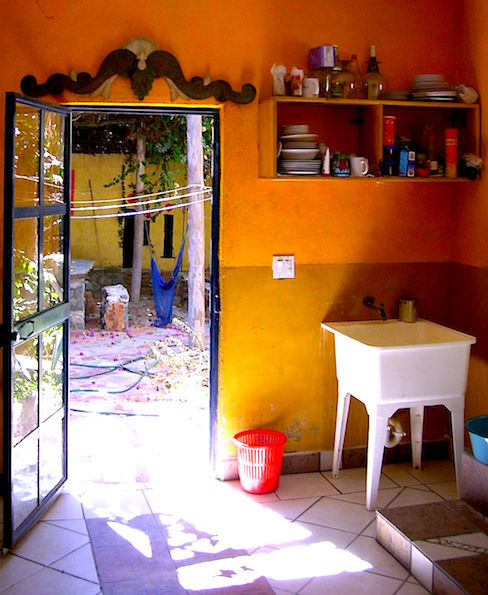
kitchen of La Casa Azul, door open to the patio, orange walls

But it wasn’t just the hassle of the refrigerator. It was cumulative. The hedges might be dying. Could it really be from lack of water? “Do you have a hose?” rang in my mind. “Puedes pintarlo,” Umberto had said. You can paint it. And before I left Todos Santos, the refrigerator stopped working all together. I didn’t even ask them to fix it. Things had deteriorated beyond that. I lived out of my two little ice chests. I felt helpless in Todos Santos, trapped. In the end I fled my beloved Casa Azul. I’ll always be glad I did, and I’ll always regret it couldn’t have worked out differently. When the wealthy Mexican artist refused to give me back the $700 he owed me from my deposits, the bad fridge was one of his reasons. The memory still brings me to wall of anger, the stone cold against my fingers. So when I found myself living out of my ice chests again here, I know the rest of this was at work beneath the surface. I was desperate to get away, out of all proportion to the circumstances. I threw myself once more into looking for a mobile home, contemplating buying a trailer, even looking at other rentals. But then my landlord gave me his refrigerator, and the panic eased. I am now soaking the hedges every other day, hoping they’ll revive. And I’m thankful I’m not fleeing. I know when the day comes, it will be hard to leave my enchanted courtyard garden. I don’t want it to come in haste, unsettled, my need to escape eclipsing everything. I want the peace of mind to cherish what I have through that last day, still obscured in mist, be it in two months or twelve years. If I could do it over again, I would stroll through the kitchen at La Casa Azul with all my gladness and all my gratitude sitting there beside my grief. I would run my hand against the orange wall, take in the sunlight and the colors and relive that last goodbye without the taint of despair, my clear heart cheering in a loud and grateful voice.

Banished Again (16)

Almost a third of my year is already over, and still I struggle with my chosen focus for this year’s blog. My friend Colleen once suggested I could stick with it for awhile and then abandon it at some point later in the year. “But I don’t want to abandon it,” I told her. My tone was cranky, miffed, defensive. I had made this choice, and there were endless possibilities to write about within it. There was no reason to give up on it. There was every reason to persevere. But in the time since our conversation, her suggestion whispers in my ear from time to time. It tries to seduce me. Stubborn creature that I am, I shush it. I turn my head away, present it with my back. I refuse to listen. And yet, when the whisper comes, when I feel the warm breath on my ear, it is a siren call. Today, I even counted on my fingers. If I stayed with Mexico for six months, when would half a year arrive? October? It wasn’t soon enough.

“But I don’t want to abandon it,” I say again out loud. There is no icky tone now, no crankiness, no bridling at a sibling’s suggestion. I really don’t want to abandon it, even as the idea of letting it go calls to me, full moon to high tide. But I am afraid. I was out of town, two short trips back to back, weeks lost to preparations, to journeys, to recovery. I am a week behind on my blog, me who wanted not to fall behind this year, not to spend time playing catch-up. But I know there is more than the ordinary resistance to writing behind my delay. I glimpse part of my problem–trying to write about all things Mexico is not only my fear of failure, of not doing it justice. I think fear lives in the fact it is so complex. It is not simple for me to think about Mexico. I can’t make broad, clear claims because it is all too layered, too complicated for that. My mind is always studying the complexity, weighing the distinctions, wondering about the reasons. I become overwhelmed. How do I capture the intricacies? I know in my heart I need to write about the specifics, not worry about whether or not the largeness of things seeps in. But my head worries about oversimplifying, about getting it wrong.

How do I write about the racism I felt there? Will my readers understand how tiny the percentage of people were who faced me with resentment, even hatred? How can I tackle something like that without talking about all the reasons their feelings are understandable, without comparing it to what people of color face every day in the United States? How do I take on something so big in one blog post? How do I explain my longing for life among Mexicans, for their natural grace, that warm and gracious generosity? Will my readers believe I think people in the United States can’t be as welcoming? Do I really want to try to dissect our stereotypes in 500 words? And what about the idea that most of what I know about the Mexican people comes from only one strata of society? People make claims all the time that are not true for all of Mexico. It is not one thing. It is not only Baja California Sur and Jalisco. The United States is not only Alaska and New Jersey.

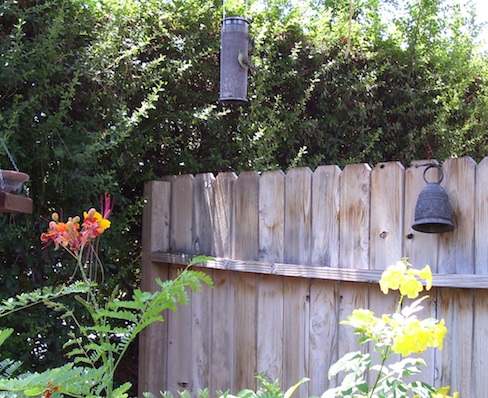
Goldfinch on tube feeder with Mexican birds of paradise and tecoma blossoms

I sigh and take a sip of water, set the glass on the patio table beside me. I listen to the quiet sound of the misters, watch a goldfinch alight on the thistle feeder. “No,” I say, a laugh in my voice now, “The United States is not only Alaska and New Jersey.” I shake my head, a small smile on my face. I am satisfied in the aftermath of release, my fears banished again in the act of relinquishing them to the page, a second exorcism on this chosen path. Mexico is not only Baja California Sur and Jalisco, but I will write about them anyway. I will write what I know. I will write what I believe, what I think, what I wonder, and I will trust my readers with the rest.

Culture Shock (15)

The cats and I crossed the border from Sonoyta, Mexico, three years ago on the second of July. I sang “California Here [We] Come” most of the way through Arizona. Near the California border, we were perched on a ridge on the highway with lightning breaking beside us, my fingers white where they gripped the wheel, the thunder drowning out the beat of my heart. But it cooled the air, welcome relief from the July heat, the desert washed clean around us, alive in scents and color. We bogged down just west of Blythe, an accident on the interstate, and I dipped a washcloth into a bucket of ice water, squeezing it out again and again on the heads of my two cats. I remember running ice cubes over my own forehead, across the back of my neck, along the curve of my collar bone. I decided I was being groomed in some fashion, learning a new kind of endurance on that journey. I would feel that again in the weeks that followed our new lives in the Coachella Valley, coming to terms with the lethal summers, knowing the heat could kill me.

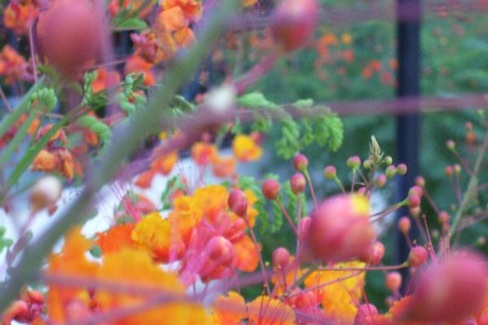
Close-up of Mexican birds of paradise_orange blooms and buds

I took comfort in the bright orange blooms of the Mexican birds of paradise that laced my new home. I thought it was a happy omen. I remember sitting that first evening on the lawn of the motel across the street from the apartment I’d rented over the internet, using their wireless to send emails to Mexico, letting people know we’d arrived, safe, sound, staggered by the feat. I remember walking in the days that followed, feeling like I’d landed on another planet with the wide, clean streets, the expensive landscaping, the manicured everything. After the narrow cobblestone streets of Ajijic that had been my world, being here couldn’t have felt more foreign. I remember feeling like an alien, desperate to connect with the Mexicans who crossed my path, the woman in the mall restroom, the tailor near my new home, the bartender at the Mexican restaurant who told me the owner there was from Guadalajara. I was stripped of the need to speak Spanish, but I didn’t want to stop. It felt wrong. And everywhere I looked, I saw signs of wealth, and you could walk for miles without being able to buy a bottle of water in the brutal heat.

I wanted a tiendita on every block, even in the residential neighborhoods. I wanted brown skin, black hair, warm, laughing bodies greeting each other in the streets, greeting me. I craved the rich, textured, vivid world I’d left behind. I felt small and unveiled, vulnerable, alone. I missed Ana and Rodolfo so much it hurt, an ache that didn’t go away. I didn’t want to be here. I only wanted to be there, in that other world that already seemed like a dream, all those hundreds of miles away, where I’d left all the food that had flavor, all the color that had depth, all the people who met me with an open heart, warm brown eyes meeting mine. I wanted fruta picada on every corner, tortillas delivered every morning, still warm, the sound of the tamale man calling in the early night. I wanted the life that had become mine. I wanted to go home.

Exorcising Demons (7)

It’s my seventh week, and still I’m afraid each time I won’t have anything “good” to write. I worry I won’t be able to enter in, that “having” to tie my post to Mexico will make it boring or contrived. I worry because I think I have already told you all my good stories about Mexico, my first whale, my magic walking loop in Guanajuato. What else? I have brainstormed lists of things I can write about, and still every week I’m afraid. And I don’t want to spend all year afraid. I want to break through this. Surely I can find things I want to say about a place that goes so deep in me, whose images swim through my days, wade through my sleeping dreams, whose people live inside me–vivid, dark skinned, brown eyes alert and present. I want to find my way in and stay there, watch my blog grow, be happy with what I touch, excited about what’s to come, each new waiting post a pleasure, another chance to write about what I love, what moves me, makes me feel, come alive. I want to banish the damn fear once and for all. (Does it ever work that way?)

Brian laughed at me when I told him. “I’m sorry, ” he said, still laughing his wonderful laugh. “I’m afraid you simply can’t feel that way.” He was teasing but not teasing. I know it defies logic, is ludicrous in light of my scribbled lists of topics. But each week I become tight, braced, hands out in front of me, warding off monsters. Nothing to say? Nothing worth reading? Nothing I can remember well enough? So make it up, I think. You told your readers you might write fiction. So, write fiction, then. Easier said. Maybe I’m really afraid I can’t do Mexico justice. How can I bring Ana to life, laughing in the living room on Aldama? Rodolfo, offering me a taste of his exquisite pipián, eager, watching my reaction? Iris, a wonderful sly smile on her face, bringing me my birthday dinner at Il Giardino? How can I let you know what they meant to me, alone in a strange country, my lifelines there? How can I explain why I almost never call them, how even now my heart breaks a little and my eyes fill? How they weren’t only my anchors, my buoys in a foreign land, but they seemed to love me so completely, took me just as I was, found joy in me?

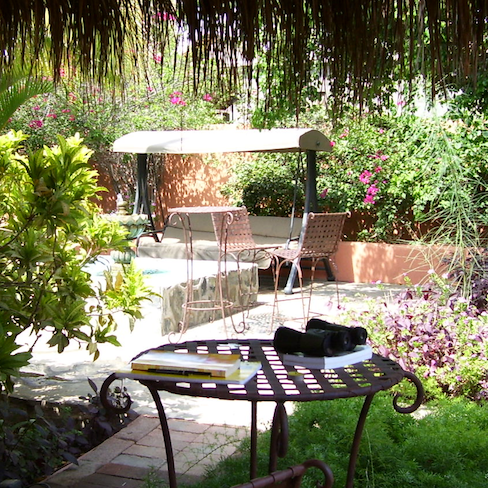
patio at Las Flores Posada in Todos Santos, my writing notebook on the table

I wipe tears away with the back of my hand from where they pool above my upper lip. One stray one slides down my left cheek. The misters cool the pre-dusk air, and a hummingbird alights on one pointy tip of the big cactus, taking in their moist cloud. For now, my fears abate, chased off by this release, I think, and because I’ve touched these memories for myself, even if I am no more confident of presenting them to you. I breathe, and sigh, sip my water, listen to the evening chatter of the house sparrows in the hedge behind me, the pwitter of the mourning dove’s wings as he flutters to the ground from his perch atop the wooden fence in search of fallen thistle seeds. Maybe, I think, I only need to become present to do this without fear. And maybe that’s where I’m afraid of failing.

[Editor’s note: This photo shows my writing notebook and binoculars on the patio at Las Flores in Todos Santos, Baja California Sur.]