Salsa that Sings (17)

Sortera gave me some extra ripe heirloom tomatoes at the farmer’s market Saturday morning. “¿Para mi?” I asked, surprised, pleased. She nodded.

Para salsa.

Ah, muchas gracias,” I said. “¡Que bueno!” I thought for a moment. I big grin came over my face, the child who has figured out something wonderful. “Tengo chips!” I declared, and she smiled back at me. What luck.

I was so glad she offered them to me again. The last time I had hesitated, demurring, suggesting she might want to make salsa from them. (So dumb, this one—of course she could have all the tomatoes she wanted. This was her family’s business.) I know I upset her. I was able to convince her I’d love to have the tomatoes. But in Mexico there should not be any hesitation, only the resounding “Yes.” You accept all that’s offered.

I’m not sure I could ever learn to do that. I know when I lived there I turned things down, begged off because of my work, my lack of time. On New Year’s Eve in Todos Santos, I called Iris to tell her I wouldn’t be coming to their family celebration after all. I felt terrible about it, but I didn’t want to drive past all the bonfires in the streets, through all the fireworks. I was afraid, hid out at home instead. In Ajijic, I turned down more than one invitation to visit my neighbor Ramona, though I don’t think she ever took offense. I think I may have even bowed out once from attending the harvest celebration at the milpa, and I’d undo that in a heartbeat now if I could.

The truth is I was working a lot–too much still then, I think–so much of my time in Mexico spent at home, hunched over my laptop. Though that work allowed me to be living there, so my lament can’t be too strong. Still, I regret not learning more, not leaving with more knowledge, not bringing back more concrete memories. I wish I’d asked Ramona to show me how to make salsa in her molcajete, her basalt mortar. She worked for hours in her dark kitchen, making almost everything from scratch, filling the traditional female role for her big family. She would have been happy to teach me, I think. It would have given us something to do together, too, would have been better than our awkward but heartfelt greetings, our shy but regular exchanges of small gifts, our attempts at chatting when I say with her family in their living room.

And Rodolfo would have permitted me to watch him cook, I’m sure. I know he loved for me to get so much pleasure from what he prepared. I could have learned how to make pipian from a master. And when I made salsa from Sortera’s tomatoes now in my southern California home, even if I made it in the blender, it would sing to me of Mexico. Instead, it makes me miss it more.
Banished Again (16)

Almost a third of my year is already over, and still I struggle with my chosen focus for this year’s blog. My friend Colleen once suggested I could stick with it for awhile and then abandon it at some point later in the year. “But I don’t want to abandon it,” I told her. My tone was cranky, miffed, defensive. I had made this choice, and there were endless possibilities to write about within it. There was no reason to give up on it. There was every reason to persevere. But in the time since our conversation, her suggestion whispers in my ear from time to time. It tries to seduce me. Stubborn creature that I am, I shush it. I turn my head away, present it with my back. I refuse to listen. And yet, when the whisper comes, when I feel the warm breath on my ear, it is a siren call. Today, I even counted on my fingers. If I stayed with Mexico for six months, when would half a year arrive? October? It wasn’t soon enough.

“But I don’t want to abandon it,” I say again out loud. There is no icky tone now, no crankiness, no bridling at a sibling’s suggestion. I really don’t want to abandon it, even as the idea of letting it go calls to me, full moon to high tide. But I am afraid. I was out of town, two short trips back to back, weeks lost to preparations, to journeys, to recovery. I am a week behind on my blog, me who wanted not to fall behind this year, not to spend time playing catch-up. But I know there is more than the ordinary resistance to writing behind my delay. I glimpse part of my problem–trying to write about all things Mexico is not only my fear of failure, of not doing it justice. I think fear lives in the fact it is so complex. It is not simple for me to think about Mexico. I can’t make broad, clear claims because it is all too layered, too complicated for that. My mind is always studying the complexity, weighing the distinctions, wondering about the reasons. I become overwhelmed. How do I capture the intricacies? I know in my heart I need to write about the specifics, not worry about whether or not the largeness of things seeps in. But my head worries about oversimplifying, about getting it wrong.

How do I write about the racism I felt there? Will my readers understand how tiny the percentage of people were who faced me with resentment, even hatred? How can I tackle something like that without talking about all the reasons their feelings are understandable, without comparing it to what people of color face every day in the United States? How do I take on something so big in one blog post? How do I explain my longing for life among Mexicans, for their natural grace, that warm and gracious generosity? Will my readers believe I think people in the United States can’t be as welcoming? Do I really want to try to dissect our stereotypes in 500 words? And what about the idea that most of what I know about the Mexican people comes from only one strata of society? People make claims all the time that are not true for all of Mexico. It is not one thing. It is not only Baja California Sur and Jalisco. The United States is not only Alaska and New Jersey.

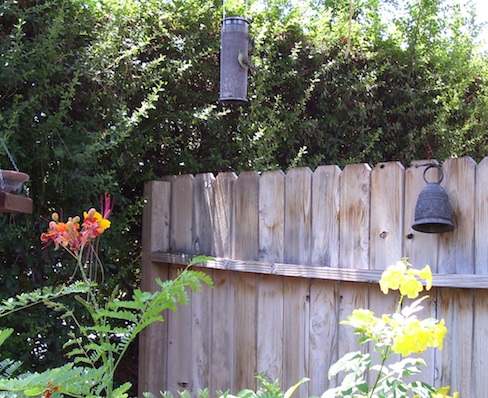
Goldfinch on tube feeder with Mexican birds of paradise and tecoma blossoms

I sigh and take a sip of water, set the glass on the patio table beside me. I listen to the quiet sound of the misters, watch a goldfinch alight on the thistle feeder. “No,” I say, a laugh in my voice now, “The United States is not only Alaska and New Jersey.” I shake my head, a small smile on my face. I am satisfied in the aftermath of release, my fears banished again in the act of relinquishing them to the page, a second exorcism on this chosen path. Mexico is not only Baja California Sur and Jalisco, but I will write about them anyway. I will write what I know. I will write what I believe, what I think, what I wonder, and I will trust my readers with the rest.

Culture Shock (15)

The cats and I crossed the border from Sonoyta, Mexico, three years ago on the second of July. I sang “California Here [We] Come” most of the way through Arizona. Near the California border, we were perched on a ridge on the highway with lightning breaking beside us, my fingers white where they gripped the wheel, the thunder drowning out the beat of my heart. But it cooled the air, welcome relief from the July heat, the desert washed clean around us, alive in scents and color. We bogged down just west of Blythe, an accident on the interstate, and I dipped a washcloth into a bucket of ice water, squeezing it out again and again on the heads of my two cats. I remember running ice cubes over my own forehead, across the back of my neck, along the curve of my collar bone. I decided I was being groomed in some fashion, learning a new kind of endurance on that journey. I would feel that again in the weeks that followed our new lives in the Coachella Valley, coming to terms with the lethal summers, knowing the heat could kill me.

Close-up of Mexican birds of paradise_orange blooms and buds

I took comfort in the bright orange blooms of the Mexican birds of paradise that laced my new home. I thought it was a happy omen. I remember sitting that first evening on the lawn of the motel across the street from the apartment I’d rented over the internet, using their wireless to send emails to Mexico, letting people know we’d arrived, safe, sound, staggered by the feat. I remember walking in the days that followed, feeling like I’d landed on another planet with the wide, clean streets, the expensive landscaping, the manicured everything. After the narrow cobblestone streets of Ajijic that had been my world, being here couldn’t have felt more foreign. I remember feeling like an alien, desperate to connect with the Mexicans who crossed my path, the woman in the mall restroom, the tailor near my new home, the bartender at the Mexican restaurant who told me the owner there was from Guadalajara. I was stripped of the need to speak Spanish, but I didn’t want to stop. It felt wrong. And everywhere I looked, I saw signs of wealth, and you could walk for miles without being able to buy a bottle of water in the brutal heat.

I wanted a tiendita on every block, even in the residential neighborhoods. I wanted brown skin, black hair, warm, laughing bodies greeting each other in the streets, greeting me. I craved the rich, textured, vivid world I’d left behind. I felt small and unveiled, vulnerable, alone. I missed Ana and Rodolfo so much it hurt, an ache that didn’t go away. I didn’t want to be here. I only wanted to be there, in that other world that already seemed like a dream, all those hundreds of miles away, where I’d left all the food that had flavor, all the color that had depth, all the people who met me with an open heart, warm brown eyes meeting mine. I wanted fruta picada on every corner, tortillas delivered every morning, still warm, the sound of the tamale man calling in the early night. I wanted the life that had become mine. I wanted to go home.

The Trouble with Attachments (14)

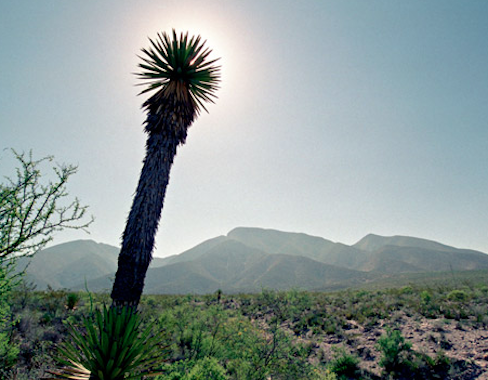
Three years ago on the first of July I was driving west across northern Mexico in the late afternoon. I planned to spend my last night in the country near the little border town of Sonoyta. I wanted to cross into Arizona early the next morning. The weather had been kind to us, clouds hugging our toll road for the past three days, but it was still hot. Undeveloped desert stretched in all directions. The night before, we stayed at a wonderful motel, but I can’t remember where it was. I only remember there were big trees and grassy areas, wild ferns, lush growth in contrast to the sparse desert. I walked to see the nearby river from the overpass, and on my way back to my room a big truck drove past me. It was filled with pigs. They were screaming, as though they knew where they were going. I’ll never forget the sound or the feeling of helpless terror it conveyed. I remembered reading (in a romance novel!) that pigs are almost as intelligent as dolphins. Now when I miss bacon I remember their screams.

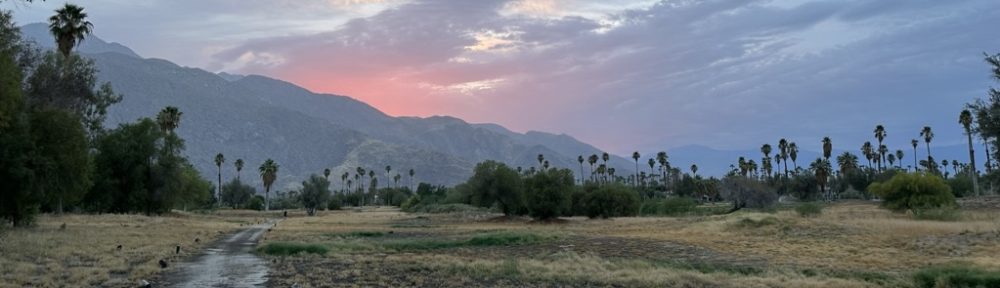
Desert and mountains copyright Tommy Huynh

Later, I ate dinner on the patio. I lingered through the late afternoon and evening by the pool. It was safe and soothing, my oasis in a stressful journey from Jalisco with my two cats. But as is my wont, I decided I would try to repeat this luxury the following night. This is where I went astray. In the afternoon when I was about an hour or so from the border, I saw a motel in the middle of nowhere, sitting alone on the right-hand side of the highway. It was new, and the man in the office was warm and kind. But I had it in my head I wanted a pool. He told me about a motel with a pool in the next town (whose name also escapes me now, and no staring at my worn and folded map evokes an answer), so I thanked him and drove on. I found the motel and checked in. And little by little I discovered this was where the army stayed. There was a pool, all right, but it was crowded with young army men on their off shifts. I was damn well going to swim anyway, and swim I did, weaving in and out of the boisterous young men. I chatted with one, treading water in the deep end, and that’s when I got the skinny on the place. It turned out they came and went all night long.

It wasn’t only the incredible, constant noise that marred my night. It was the energy of the military outside my door and the sight of all those young men carrying machine guns, that even after almost two years in Mexico I never learned to see without a little skip in my heart. To this day I am convinced my last night on the other side of the border would have been filled with big sweetness if I’d only stayed at the place that caught my eye, not had my heart set on a pool at all costs, been content with my previous night’s oasis without being greedy and trying to grab after more. But there was sweetness in the early morning hours there. I couldn’t get Sable out from under the bed when I was ready to leave, and one of the army guys who was out by the pool offered to help me. I couldn’t have done it alone, and I owe him a debt and my big gratitude. Maybe he was the reason I was there.

[Editor’s note: This photo is by Tommy Huynh. He holds the copyright, and you can find it on his website: http://www.lumika.org/mexico/natural_scenes/14.htm. Used here with his permission. And on another note, I got a chuckle out of my title here. I wondered if people would think I was going to talk about problems with attached files! ;-) ]

The Moon and the Stars (11)

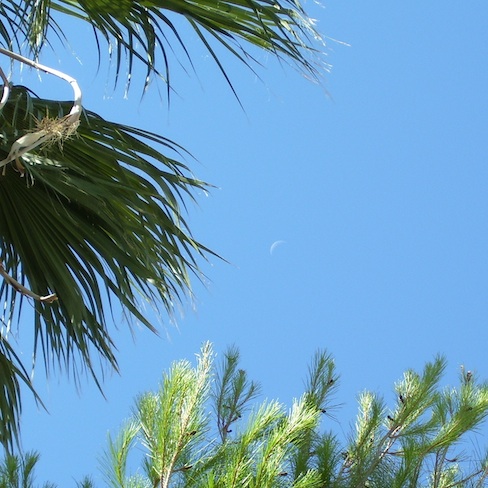
I am sitting cross-legged on my purple yoga mat in the courtyard. I sweep my arms up, my eyes following my hands in their arc. I see a thin sickle of moon framed between the big fan palm and the pine tree, white against the pale blue sky. In the act of drawing breath, of sweeping my arms up, the flicker of thought comes to me to look for the moon. I’d seen it two days in a row from under the pine tree when I filled the finch feeder with thistle seeds. And now, just as I am thinking it may not be visible, that it rises later and later each day, the moon appears. It always surprises me, the unexpected gift of it, a greeting and a message, both. Whenever it finds me, it makes me stop, brings me present, tells me I am not alone. Hello, little one. Here I am. Here we are together.

moon with palm and pine

It feels like divine intervention, makes me feel tended with exquisite care, the moon placed just so, my gaze angled just so, positioned and poised to receive the gift, the true present. When it happens, I feel affirmed. I am in the exact spot I am meant to be, at the exact time. I have stopped on Palo Fierro, that day the raven and the mockingbird danced across the sky, showing me the late morning moon. I have stopped on Benito Juarez in Ajijic, neck craned, blocking the narrow banqueta, my eyes traveling across the vivid fuchsia bougainvillea trailing over the orange wall to find the half moon waiting for me in the afternoon sky.

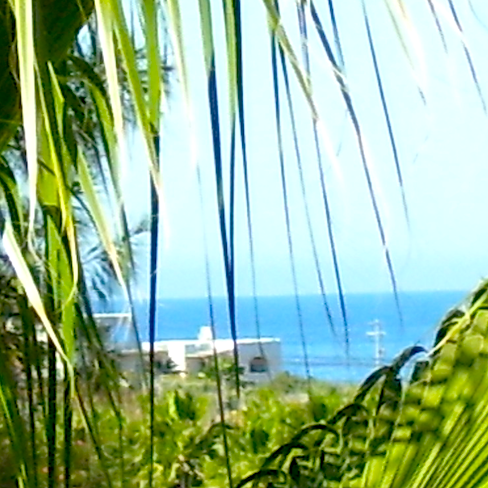
The first stars in the evening feel a bit like this, too. When I walk at dusk I look for them, alert for that one moment when the sun’s light lessens its hold on the heavens and that first starry glimmer appears. I don’t know many names of the stars and the planets, but I am fond of Venus. When I lived in Todos Santos, it may have been Venus who greeted me in my semi-third floor roost. I’d sit outside under the small corner of roof in a tall chair beside the low parapet. I spent all my free time up there, when I wasn’t working or out walking, feet propped on the metal railing, my world spread out below. I faced southwest. In the mornings I would lean out to the east to watch flamingo clouds, listen to the village roosters taking roll. In the afternoons I’d watch the sun glint off my sliver of sea.

sliver of sea from roost in Todos Santos

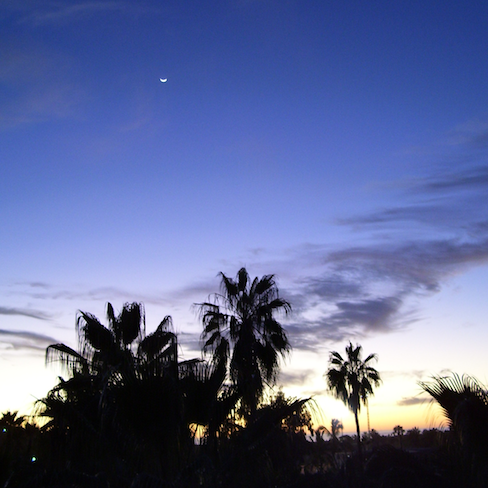
moon and Todos Santos sunset from my roost

I can’t count the evenings I sat to watch the sun sink into it, the whole Pacific ablaze. After, I’d watch my hill to the south lose its outline against the blue black sky. But before the colors disappeared, when I spotted that first big shining planet, and after I made my wish, I’d lean way out over the rebar rail, twisting to search for the other stars who made a big cross against the evening sky. I saw it once long after I moved back to the United States, but it was in the wrong part of the sky, at a strange angle, my cross but not. I want to say it is the Southern Cross, but I don’t know where that comes from, like the odd word that pops into your head when you’re working on a crossword puzzle, just as likely to be wrong as it is to be right. I discovered the long narrow cross on my own one night in Todos Santos, and I looked for it every evening after. It felt like the moon feels to me, like a companion, a familiar presence. You are not alone. It whispered to me, sitting in my perch in the late dusk or the dark of early night. And I was ever grateful, I who was so far from home in a foreign land, no firm earth beneath my feet.

The Sunshine Award

It’s my pleasure to report I was nominated for the Sunshine Award by Natalia Sarkissian, an amazing photographer and gifted writer. Please visit her beautiful blog, Postcards from Italy.

Thank you, Natalia! You are a dear to include me in this. :)

I am posting the rules below, as well as a list of the blogs I am nominating in return. I hope you will follow the links to see where they lead. And I will include my “required” answers to the ten questions in a subsequent post.

sunshine award, orange flower and blue sky

Award Rules
1) Include the Award’s Logo in a post or on your blog.
2) Answer 10 questions about yourself.
3) Nominate 10 other bloggers.
4) Link your nominees to this post and comment on their blogs, letting them know they have been nominated.
5) Share the love and link the person who nominated you.

My nominees are:

The Urge to Wander
http://theurgetowander.com/

Romance Novel
http://jmgromance.com/

Global Anni
http://globalanni.wordpress.com/

avantourists
http://avantourists.com/

The Wanderlust Gene
http://thewanderlustgene.wordpress.com/

And my big thanks again to Natalia Sarkissian and her beautiful blog, Postcards from Italy.

Escape (10)

The air has been terrible for weeks. It brings back dim memories of smog-choked mountains from my first nightmare summer here, images I’ve told myself in the intervening years I must have misremembered or exaggerated in my own dark gloom. I check the air quality in the Los Angeles Times every morning, little colored circles, green, yellow, orange or red. We have been orange almost every day, “unhealthy for sensitive individuals.” Once we were even red, the only one, a danger for everyone, while the rest of southern California was green or yellow. It’s so bad it makes me not want to live here, has me back on craigslist combing for rentals, a part of me screaming inside to get away. Do I live near a nuclear power plant? Head for Blythe or Algondones? Can I trade this sun, this warmth I’ve become so spoiled by? They’ve been in the 60s at the beach all summer. It makes me shudder. (Oh, and yes, I realize summer has not yet actually begun, but we’ve been in the 100s for over a month already. It skews my perspective.)

Can I live like this, with this foul air, if it’s only for a handful of months every third summer? In Ajijic it was the spring months that were bad. I arrived in April, shocked by the horrible air. They allow agricultural burning, so all the fields in Jalisco were turned to ash in preparation for the summer planting, and the smoke would gather above the lake, blotting out the mountains on the southern shore. Like here, people would gaze back at me, a blank look on their faces, when I lamented the smog. How can they not notice? It’s with me always, my body’s instincts on guard against it. My lungs take shallow breaths, as though they might reduce the damage. And our mountains, our glorious mountains that are a presence everywhere, are diminished by the smog. My eyes seek them out again and again throughout the day. But instead of their surprising nearness, their magnificence that makes my heart leap in my chest, they are made distant, dulled, lessened by the ugly air that clings to them.

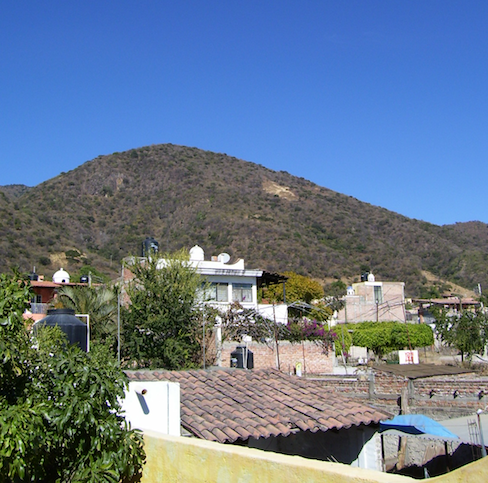
view from kitchen, ridgetop and houses

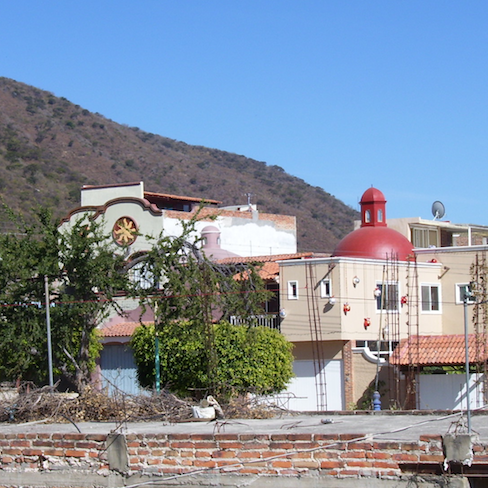
view from kitchen, more ridgetop and houses

When I lived in Ajijic I imagined a life where I would escape each spring, moving the cats to Puerto Vallarta for April, May, June. Now I fantasize about escaping to Ajijic for July, August, September. Soon the cicadas will arrive in the village, if they aren’t there already, harbingers of the nighttime summer rains. I lived in the hills where the lightning clung, the thunder crashing close to our tile roofs in the middle of the night, like no noise I’ve ever known, the fierce roar of the gods. I’d lie on my back in the dark, my bedroom windows open to the north and east, the lightning bright behind my eyelids. I’d listen to the thunder’s echoes roll out across the lake below, the sound reverberating for long moments as it traveled across the basin. At some point the downpour began, rain racing off downspouts like Niagara Falls, making rivers of our steep streets. In the mornings the wet cobblestones would shine in the sunlight, all dust banished from our world. I’d look out my kitchen window to the nearby ridge, the crest of our hill. The air would be washed clean, too, in the brilliant summer light, the kind of sharp clarity that makes you want to launch yourself from the rooftop out into the blue sky, to take wing across our world.