Alpiste (13)

“The pine tree is coming down in two weeks,” my landlord yelled at me. He was angry with me at the time. I’m hoping he didn’t really mean it, doesn’t follow through with his threat. Our pine tree has been through so much. She should never have been planted in this desert to begin with. Fierce wind took more than half of her away before I came. She was haggard, drying, teetering, it seemed, brushing close to death. But she rallied, and now the shade she casts is doubled, maybe tripled. And the spots for birds to perch or shelter have multiplied, as well. I pray she’ll be protected, pray she’ll thrive. I would hate to see her taken, a mean recompense for having grabbed onto life with such grit, such gusto. I’d be afraid, too, losing her would mean losing even more of the birds who like to linger in our little corner of the world.

Already there are fewer birds here than before. The bulk of the house sparrows have disappeared again, and the doves don’t fill the tray feeder in the mornings like they used to, all packed together, a picture I never did capture properly, all those pretty bird butts ringing the wooden frame. When I first began to notice their absence, in my usual fashion, I wondered if it was because of me. Had I been found wanting? Later, I considered other possibilities, but my first thought was I had not been enough in some way. Could it be the desert rats, cute little guys with big dark chocolate eyes, who eat the remaining seeds in the night? Do they eat bird eggs? Attack birds? I don’t know. I worry, too, it is because I switched to the cheaper bird seed. My new attempts at being frugal and the fact I can bring the twenty-pound bag home from True Value on the back of my bike has me using the dull, dusty feed with cracked corn and milo.

In Hopland I bought a hundred pounds or more at a time and blended them myself. It was cheaper that way, but it was a big procedure, up to my armpits in the plastic bags to mix them. But I loved the way the seeds moved through my fingers, rich with oils and colors. In Ajijic, I could walk to the next block over and buy my bird seed from my favorite tiendita there. They would scoop up the alpiste and weigh it in a plastic bolsa. I could get just half a kilo at a time, stroll home with it, so easy. I miss that. I always suspected folks were cooking with it, too, but I never asked. I know it can be used to make atole, a common hot drink, a comfort. But I trust many of my neighbors were feeding it to their birds, as well. On my block and the next, I would hear the exotic birds calling from the entryways of homes as I walked by. I didn’t know alpiste was canary seed until I moved back to the United States and went hunting it down for my bird seed blend.
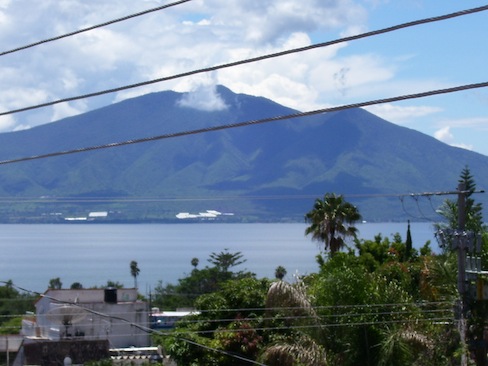
view of Lake Chapala from my veranda

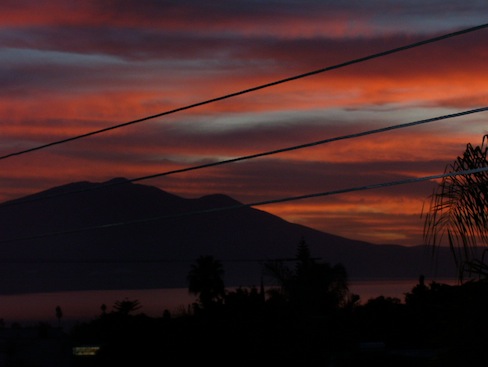
View of lake from veranda after sunset

I had sparrows in Ajijic, too, though never more than three or four at a time, and one dear hummingbird with a feather out of place. (He was the hardest to say goodbye to, after Ana and Rodolfo. I cried when I took his feeder down and left him with a paper cup of sugar water. He sat on the wire and watched me for a long time.) There were no trees on my block there, no real shelter, but still the sparrows would materialize at the tray feeder, eat the alpiste, chat among themselves. I’d sit on my veranda looking at the lake and listening to their quiet exchange.

Now in my courtyard I think again about buying a more expensive seed blend. Maybe I’ll offer it as a special treat from time to time. Or maybe I’ll begin winning more writing contests, left and right and left again, and I won’t even blink at the idea of returning to the rich, pretty birdseed my birds here became accustomed to. I hear the house sparrows behind me now, soft, muted, rounded sounds, satisfied from a midday snack, enjoying the shade of the pyracanthas and the cooling mist the dry, hot wind wafts their way in small puffs.

The sun reaches my feet, burns my right arm and hip as I write, but I keep going, leaning, crooked, toward my remaining shade. I remember the quiet chatter from my sparrows in Ajijic. I relish them in memory even as I savor the soft murmurs behind me now in the hedge. And even though the heat is still climbing, and even though I have much to do still as the day unfolds, I stop, linger, feeling oh so lucky, loving our little desert courtyard, this small oasis on a hot, busy day.
Escape (10)

The air has been terrible for weeks. It brings back dim memories of smog-choked mountains from my first nightmare summer here, images I’ve told myself in the intervening years I must have misremembered or exaggerated in my own dark gloom. I check the air quality in the Los Angeles Times every morning, little colored circles, green, yellow, orange or red. We have been orange almost every day, “unhealthy for sensitive individuals.” Once we were even red, the only one, a danger for everyone, while the rest of southern California was green or yellow. It’s so bad it makes me not want to live here, has me back on craigslist combing for rentals, a part of me screaming inside to get away. Do I live near a nuclear power plant? Head for Blythe or Algondones? Can I trade this sun, this warmth I’ve become so spoiled by? They’ve been in the 60s at the beach all summer. It makes me shudder. (Oh, and yes, I realize summer has not yet actually begun, but we’ve been in the 100s for over a month already. It skews my perspective.)

Can I live like this, with this foul air, if it’s only for a handful of months every third summer? In Ajijic it was the spring months that were bad. I arrived in April, shocked by the horrible air. They allow agricultural burning, so all the fields in Jalisco were turned to ash in preparation for the summer planting, and the smoke would gather above the lake, blotting out the mountains on the southern shore. Like here, people would gaze back at me, a blank look on their faces, when I lamented the smog. How can they not notice? It’s with me always, my body’s instincts on guard against it. My lungs take shallow breaths, as though they might reduce the damage. And our mountains, our glorious mountains that are a presence everywhere, are diminished by the smog. My eyes seek them out again and again throughout the day. But instead of their surprising nearness, their magnificence that makes my heart leap in my chest, they are made distant, dulled, lessened by the ugly air that clings to them.

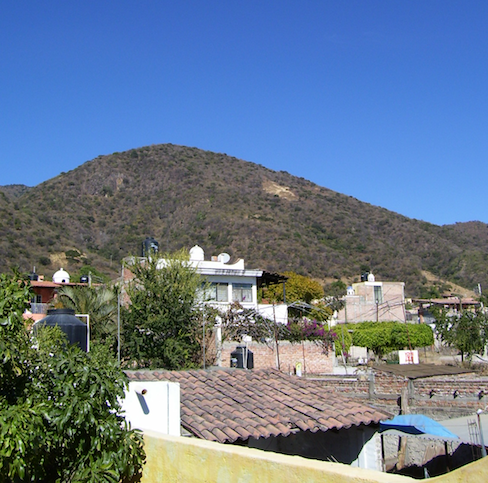
view from kitchen, ridgetop and houses

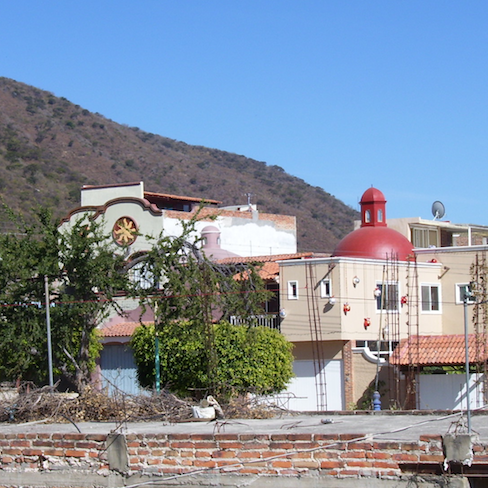
view from kitchen, more ridgetop and houses

When I lived in Ajijic I imagined a life where I would escape each spring, moving the cats to Puerto Vallarta for April, May, June. Now I fantasize about escaping to Ajijic for July, August, September. Soon the cicadas will arrive in the village, if they aren’t there already, harbingers of the nighttime summer rains. I lived in the hills where the lightning clung, the thunder crashing close to our tile roofs in the middle of the night, like no noise I’ve ever known, the fierce roar of the gods. I’d lie on my back in the dark, my bedroom windows open to the north and east, the lightning bright behind my eyelids. I’d listen to the thunder’s echoes roll out across the lake below, the sound reverberating for long moments as it traveled across the basin. At some point the downpour began, rain racing off downspouts like Niagara Falls, making rivers of our steep streets. In the mornings the wet cobblestones would shine in the sunlight, all dust banished from our world. I’d look out my kitchen window to the nearby ridge, the crest of our hill. The air would be washed clean, too, in the brilliant summer light, the kind of sharp clarity that makes you want to launch yourself from the rooftop out into the blue sky, to take wing across our world.

Manna from Heaven (9)

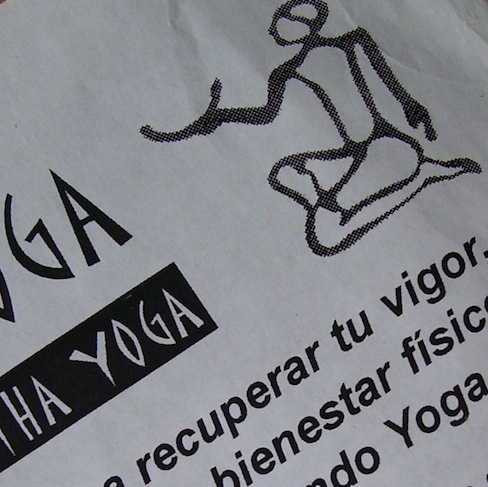
It is April, my first spring break in ten years. I am indulging in yerba maté this week, and my first cup of tea is exquisite. I walked with my lime umbrella this morning, neon green against the bright clouded sky, the rain a gentle rhythm against the fabric, the storm clouds clinging to the rims of our mountains. It made me wish I had my camera. Now the sun is shining and the barest spattering of rain is coming down. My father told me there are Native Americans who believe when this happens, this joining of rain and sunlight, a new moose is born. Today there are two new moose. My empty teacup beside me on the patio table, I open my notebook to write. A small white rectangle of paper drifts out of it, falls into my lap. Auntie Christel’s old cell phone number is scrawled on one side. I turn it over and see it is the tiny flyer for yoga classes in Ajijic. At first, I just stare at the little slip of paper in my hand, dumbstruck. It may as well have fallen from the sky, I think, than to flutter out of my composition book like that, a piece of the world I left behind.

cropped image of the yoga flyer

My mind begins to work again. It must have slipped in the other day when I was using my notebook as a table, writing thank you cards against my knees, paying the dentist bill, when I had my pathetic address book out, stuffed with a crazed fat pile of other little scraps of paper collected over the last handful of years. I remember I picked up the flyer at the health food store in Ajijic, the one next to the nursery at the bottom of my hill, on the frontage road beside the carretera. I bought big bags of yerba maté there from Argentina, the best I’d ever tasted, and the herbal tincture for Sofia’s urinary tract issues. I read the flyer now, surprised I don’t know all the words. When I lived there, I wasn’t really working to build my vocabulary, was just trying to keep up from day to day. I’d understood the gist of the words on the flyer, and that was all I needed. But now I am struck by the language, and I remember the woman wasn’t in practice for the expatriate community there. Indeed, if she had been, I think, the flyer would have been in English. She taught the Mexican community, maybe Mexican tourists, as well. I look up “bienestar,” well-being. “Come and recover your vigor, health and physical well-being.”

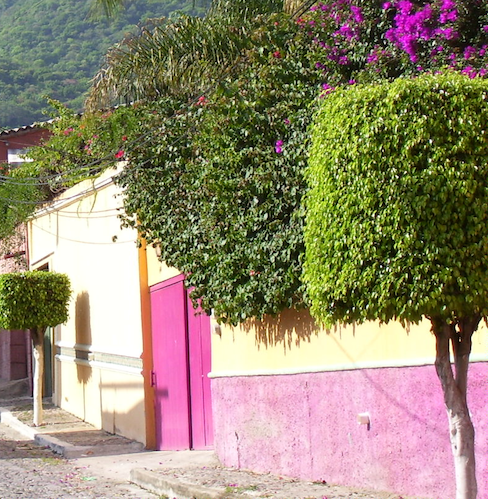
I have returned to yoga at last after long years of abandoning it, and now I wonder what it might have been like if I’d returned years earlier. What if I had acted on the longing that awoke in me when I picked this up that day in Ajijic? Would my life have moved differently? I remember the woman taught out of her home in La Floresta. It was in a neighborhood south of the highway, a block, maybe two from the lake on an east-west street. I saw a sign for yoga on a wall there in one of my wanderings. I loved the feeling of those streets, the oldness, the buckled sidewalks, the moss on colored walls, the big trees, the birds, the quiet. The sign for yoga was on a nine-foot painted wall beside a metal gate, a bell. There were huge old trees that canopied the yard behind the wall. I remember standing outside admiring it all. I ached to return to yoga there, to let the peace of that place permeate me. But I didn’t get myself there, and then I moved away.

wall with fuchsia metal door

“Hatha yoga is a discipline that teaches the natural way to live,” her flyer says, and I am struck by that now, by how simple and how true it is. I’m grateful I’ve returned to the practice after more than a decade. And holding this slip of paper in my hands, stroking the Spanish words, evidence of my life in another world, I am struck again by the generous nature of the universe. How many many times are we offered these gifts, these chances to be supported? If I had stayed in Ajijic, would I have made my way one summer morning to Evelia Lara’s home behind that wall, my body eager to return to the practice, the cobblestones wet beneath my feet from last night’s rain? I wonder, and I rub my thumb across the scrap of paper from another life. I marvel, too, at the way it fell from the sky today, manna for All Things Mexico.

Things (8)

I don’t have many physical objects to stand for the time I lived in Mexico. I think if my departure had been less quick, maybe I’d have made a point to come back with more things, mementos of my time there. But I had a “knowing” I needed to return to the States, and I left four days later. So I never bought one of those bright-colored baskets the man I liked would carry around Ajijic. I’d had my eye on the big clothes hamper. And I came back with only the one small skeleton, not the collection of dia de los muertos figures I’d imagined. I wanted to buy blankets and rugs, the texture and color that calls me to that country. But I came back without them.

So instead it was the incidental things that returned with us, Lolita Roja packed to her gills with our ordinary possessions. I used the rest of the cinnamon I’d bought in Ajijic in the first few months of our return to the States, and when it was empty, I kept the narrow plastic spice jar for a long time, reluctant to recycle it, its bright orange lid and its Mexican label a strange keepsake. My fondness for the little canela container went beyond the norm. It had lived with us there. And I stretched my aspirin for years, doling out each aspirina tablet like treasure. I loved the Mexican aspirin. I meant to buy more the day I spent in Algodones, but I forgot. They come in small rectangular sheets. You poke them out of their little plastic resting places through the foil backing. You only had to take one. (I did the milligram math when I first moved to Baja California Sur.) They were so handy for slipping into a small zipper pocket. And you could just buy one sheet if you wanted to: eight aspirin. It’s one of the things I love about Mexico–you aren’t penalized if you only have enough money to buy a small amount. The culture isn’t like ours. It’s not all about the more you can afford to buy the less you have to pay for it.

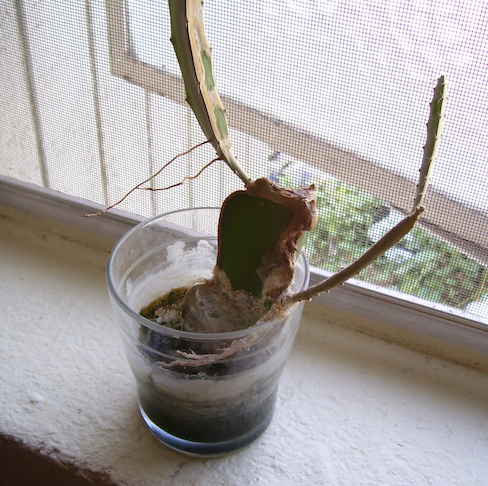
cactus start in waterglass on windowsill

I brought back dried marigold blossoms from the Aldama planters. They have thrived here in my desert garden, my “Mexican marigolds” I wrote about in last year’s blog. They are one of the dearest things I have to remember Mexico by. And on my bathroom windowsill I have another, this little cactus I found in Ajijic. It’s still in the small calcified water glass I placed it in when I first got back to the Aldama apartment with it. When I crossed the border, it was hiding in the trunk. I didn’t know what the rules were, and I wasn’t willing to risk losing this small living evidence of the world I’d left behind. I’ve thought I should plant it in my garden, that it would be happy here. But I haven’t been able to bring myself to do it, our time here uncertain, and I’m still not willing to risk parting with it.

I remember how excited I was the first time it sent out a tiny new shoot. And I remember when I found it, lying in the dirt below its parent plant on the side of the road just west of Ajijic. I’d headed past the cemetery, walked until the road ran to dirt, kept going, all unplanned. I came to big fields with running horses, half-finished dwellings made of red brick. The sounds of the cars on the carretera were faint as I walked, and now and then I caught a glimpse of the lake two blocks south of me. In time I came upon the giant parent cactus, ten feet tall, sprawled behind a brick wall. I stopped on the road to study it. There was a tree in bloom beside it, big puffy cotton-like blossoms. I wanted to come back with my camera. I stood in the road for a long time taking it all in. I felt something ease in me. I hadn’t known how much I needed to get away, how much I’d craved open space, earth beneath my feet, solitude. I soaked up rural Mexico, released breath I didn’t know I was holding, gave thanks. And when I was ready to walk on, I found this little piece of cactus lying in the dirt beside the wall, and I carried it home with care.

Fruta Picada (5)

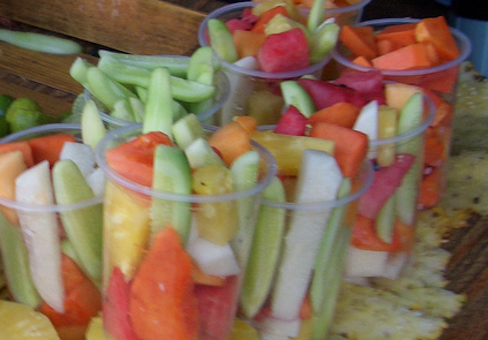
The first time I saw a street vendor selling fresh-cut fruit in Mexico I was wandering through a residential neighborhood in Cabo San Lucas, where a man wielded a small portable set-up, rolling it along the banquetas there, the sidewalks. His work area held whole fruit, cucumbers and pineapple prepped for making slices, his tools, his cutting board, his kitchen towel. It was framed of wood and bordered on three sides by glass. I watched from a small distance, fascinated, while people stopped to make their requests, listening to the rapid-fire Spanish, the different selections. In Ajijic we had a fruit stand every day at the edge of the plaza, and one just east of town on the carretera, the highway. Wednesdays another family always set up shop at the top end of the open-air market, the tianguis. You could find mango and melons, papaya and cucumbers and jicama, sometimes huge bosenberries or bright red strawberries or pineapple, fresh coconut. When there was time, they’d make up clear plastic cupfuls in advance, all cantaloupe or watermelon, or a mixture of berries, the bright colors and succulent fruit a still life on the street. Or you could ask for your own particular combination from the fruit on hand, and they’d prepare it for you. Some vendors use a dry blended chili powder; others offer a chili sauce. Always there is fresh lime and salt. The first time I tasted limon y sal y chile on fruit, it surprised me, all that hot, tangy, salty sweetness. But it grabbed me, too. I loved it. And when I was counting calories, I’d go for the cucumbers.

cut fruit and cucumbers in plastic cups in Mexico

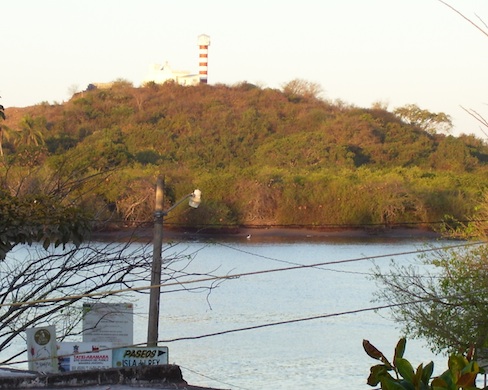
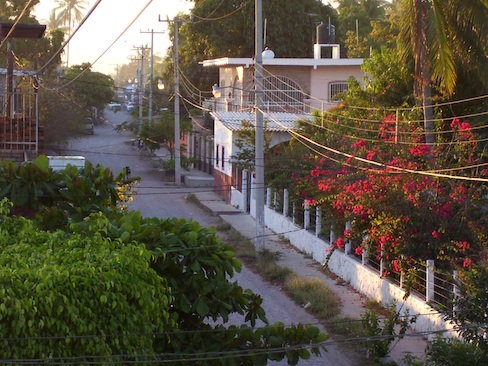
I remember stopping once at the fruit stand on the highway east of town. I was walking home from shopping at the Super Lake grocery store in San Antonio Tlayacapan. I sat on the curb near La Floresta with my large plastic cup of cucumber spears with lime and salt and chili sauce. I savored each long luscious slice, dipping again and again into the spicy red sauce pooling at the bottom of the clear plastic. And our first day on the mainland, the cats and Lolita Roja and I found fruit as if by magic en route to San Blas. The downhill road to the coastal town wound its way through the trees, and at one slow turn three women materialized in front of my car, apparitions with cups of cut fruit in their hands. I got flustered–by the unexpected suddenness, the blind curve, the rapid Spanish, my own ambivalence and groggy brain after a day of driving. I pulled over on the side of the road and chose one container of mixed melons and one of green mango. When I told them I wanted to save the fruit for later, they put the chili powder and the salt in little plastic bags for me, gave me whole limes. We stayed two nights in San Blas, time for the cats to recover from their ferry crossing nightmare. I made three meals of the fruit. It was the perfect thing. I would sit on the veranda outside our room in the warm April breeze eating green mango con limon y sal y chile. I watched the lighthouse revolve, watched our little patch of water move up the estuary, slow and quiet. I listened to the grackles calling from the trees, from the rooftops. I licked lime juice from my fingers and studied the houses down the street and wondered what it might be like to live there.

patch of estuary with lighthouse on the opposite bank

view up San Blas street from veranda

[The photo of the fruit is copyrighted by antefixus21 and can be found here: http://www.flickr.com/photos/21728045@N08/2328071644/.]

I Begin (1)

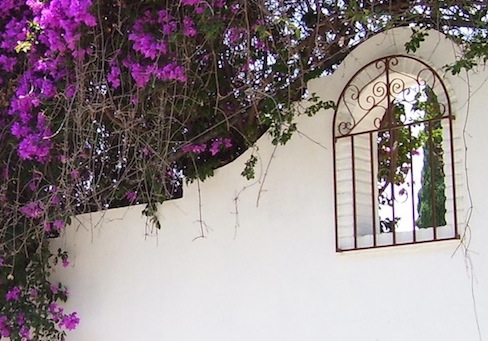
Dusk nears on the second day of my spring holiday, my first in ten years of teaching. I sit on the patio and move my pen across the page of my notebook to begin my first post for this new year of mine, 54 at 54–All Things Mexico. The task I have set for myself terrifies me, but I push the pen across the page anyway. My mind has been wandering paths as steep and twisting as the narrow callejones of Guanajuato, playing out possible topics for my blog, trying them out in my head. Why didn’t I document my time there, take vivid notes, photograph everything I loved? My fear about the course I have set for myself here makes the question come out harsh, anguished. Why didn’t I take pictures of the horses on the cobblestone streets in Ajijic? I would run to the balcony when I heard one passing by below. Why didn’t I record the sound their hooves made dancing on stone? I don’t have any pictures of the Wednesday market or the cemetery or the grackles roosting in the trees at twilight in the plaza. Why, I wonder, didn’t I photograph every doorway, every windowsill, every wall spilling bougainvillea on the street? Why didn’t I photograph every face I came to love, and all the textures and colors that layered themselves inside me, that have me missing Mexico like a river running through my California days?

white wall with window and bougainvillea

Why didn’t I take more photographs, learn more words, record the stories and the history and the rumors that came my way? Is it because I was not yet a writer in the same way I am today? In part, I know that’s true. And I didn’t know one day I’d want to write a blog about this big love of mine. I was busy taking it all in, absorbing the way it felt inside me, this foreign country where I found such sweetness, such welcome, yet where I was still so much “the other,” my white americana self a sore thumb, standing out amidst the dark hair, the dark skin of the other people in the villages. I think in my usual way I paid more attention to emotions and interactions, to the nuances of finding my way in a culture so different from the one I grew up in. I didn’t document the details, not outer or inner, only let them pile up inside me. Now I am afraid I have set myself an impossible task, but it’s one I want very much to meet. And so, as the light wanes on my California evening, I take a deep breath and reach for trust. I will find ways to write about what I love. I have already begun. A bird I don’t know in the pine tree repeats one long sliding note. I take another breath, the pen loose now between my fingers, and I know dusk settles in Mexico in just this way.