I spent Wednesday at a local resort, “day use” there my treat for spring break. I drank coffee and did my qi gong and my yoga on the cement beside the hot tub. It was warm from the sun, and I lay on my back and watched the fan palm leaves bend and bristle in the wind. I stood beside the wall of cloudy glass bricks, alone in my corner of that public world, and I kicked my legs forward and backward, punched the air before me, stood still at the end of the series, the dragon stands between the heavens and the earth. In between I floated in the hot water and let the tension leak out of my body and felt a dream emerge in me. The “Travel” section of the Sunday Times was about Mexico, and I read it greedily. It was focused on Mérida, a city in the Yucatán. Just like that, the desire to visit was alive in me. And somewhere in the midst of doing my qi gong in that hidden section of the resort, of floating in the hot water watching the San Jacinto mountains peeking out between the palm trees, of feeling the sun-warmed cement beneath my back, against my thighs while I twisted my spine and stretched my hips, a vision grew in me of a neighborhood in Mérida and a part I might play there one day. I dreamed a fountain and good food, a plaza garden, a co-op, a milpa, peace.
Category Archives: Dreaming
The DREAM Act (49)
I thought I’d read the DREAM Act had passed. But I just Googled it to confirm the details, and as far as I can tell it is still not law, even though it was introduced over a decade ago. But there does seem to be some kind of “deferred action” in place now with all the same basic parameters as the DREAM Act itself. If you are an immigrant who was under 16 when you came to this country, if you “have continuously resided in the U.S. for at least five years prior to June 15, 2012 and have been present in the U.S. on June 15, 2012,” if you were under 31 on June 15th of last year, if you are “currently in school, have graduated from high school, have a GED, or [are] an honorably discharged veteran of the U.S. Coast Guard or the U.S. Armed Forces,” and if you have not “been convicted of a felony offense, a ‘significant misdemeanor offense,’ three or more non-significant misdemeanors, or otherwise pose a threat to national security or public safety,” then you can apply for the deferred action. It isn’t clear to me what exactly the deferred action will get you, but the requirements are similar to that of the DREAM Act, so I am guessing the results run along the same lines, too. The DREAM Act allows for a 6-year path to citizenship involving fulfilling certain educational or military requirements. I read about a $495 fee, as well. And while it dismays me that we have fought over this for more than a decade, I’m glad to know we have at least put something in place. I know this will make a big difference for many of my community college students.
But I couldn’t help but feel discouraged by the rules, can’t help wishing we could embrace these young people more completely. I can’t help but wonder if there is any option in place for people to work off their fees during the process. Do we offer payment plans? And I can’t help but think about the brother and sister who are age 30 and 32. My heart sinks at the thought of being so close and not being eligible. I can see that 32-year-old woman, her heart breaking that she missed the age cutoff. But I see her smiling at her brother six years from now, her heart proud, swelling for his big happiness, his big day, becoming a United States citizen. Could we leave her behind more fully, hurt her in any bigger way?
[Editor’s note: The website I quote is available here. And that last rule sounds like it’s open to all kinds of messy interpretation, hmm?]
Dreaming Home (46)
I’ve longed for ages for a home where I felt like I could spend the rest of my life. When I moved to Sonoma County, it was the first time I had that feeling about a place. I remember driving home from Santa Rosa on Guerneville Road past green farms, the oak-studded hills before me. Look where I live, I thought. When I moved into La Casa Azul in Todos Santos, it was the first time I had that feeling about an actual dwelling. Things went terribly awry with my landlord there, but I remember that giddy feeling, thinking I’d found the home of my dreams. I remember wondering if I’d be able to negotiate the wrought iron spiral staircase when I grew old.
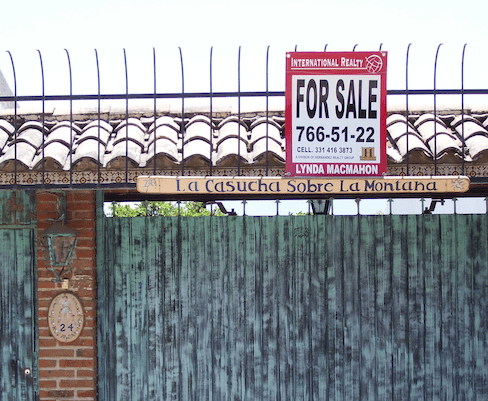
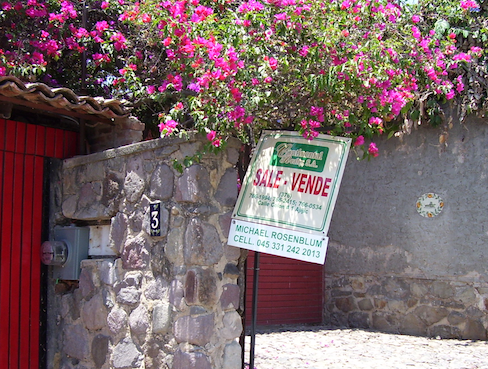
Over the years I’ve built a habit of studying the yards, examining the homes whenever I walk down the street. “Oh, I could live there,” I’d say to myself, caught by the wrap around porch or the climbing wisteria, both pleasure and longing evoked by my ritual, a bittersweet practice. When I lived in Ajijic where buying a home might have been one day more within my reach, I photographed for sale signs. I remember one advertising an empty lot of neatly turned earth, a beautiful brick wall surrounding it, a blue metal gate. I went as far as to look at two homes for sale up in the hills. One was all white and one was green, and they were both two stories tall with miradores that made them seem like three-story homes. I don’t remember any details about the houses themselves, only those marvelous rooftop patios, the views of the village spread out below them, the lake in the distance. I would have lived on those roofs.
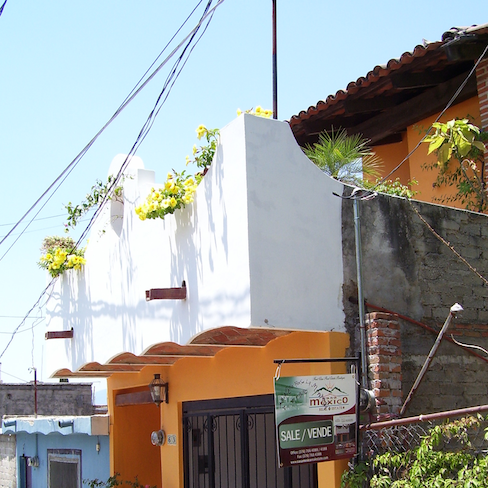
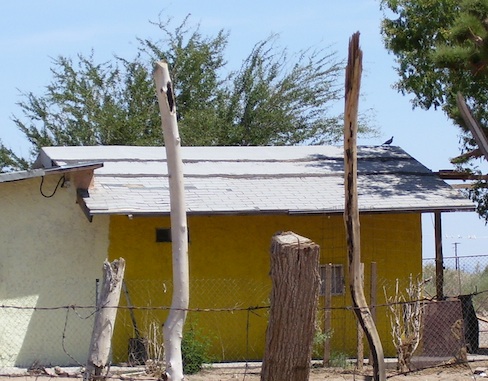
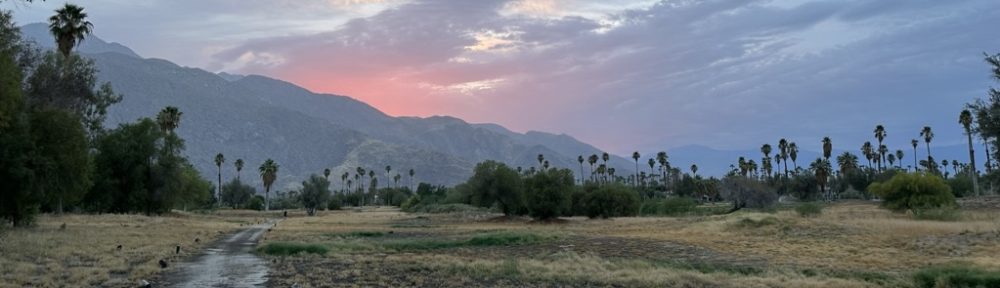
Now in my unexpected southern California life, thanks to two dear friends and the workings of a generous universe, I’m on the threshold of having my longing met in the old trailer home I’ve just bought. I don’t get to take possession of it, so to speak, until April, but it has possessed me from day one. It has grabbed me by my viscera, invoking big dreams of a magic home I can grow old in, tending my garden and writing my books, the stark place transformed little by little in the intervening years to lushness and color, where my birds will want to linger chatting together in the bougainvillea or the palos verdes. I can see myself sipping tea on my patio there years from now, watching the sun disappear behind my mountains, the sparrows and the mourning doves scritching among the leftover seeds in the late afternoon quiet. I don’t have words to say how grateful I am, how full this makes me, how much awe it awakens. But I seem determined to try anyway, to fall short but maybe brush the feathers of the thing in my attempt. Thank you, universe. Thank you, dwelling gods. Thank you, especially, my good friends. Thank you.
Closer to the Earth (44)
I’d pulled out the travel section of my L.A. Times a few weeks ago and set it aside unread. The cover story was about Mexico, about the northern village made famous for its pottery. Now the next generation are doing marvelous contemporary things with clay, and I’ve saved the photographs of big beautiful pots for my mother to see. There is one in particular I think she’ll enjoy that reminds me of some of her own large slab bowls. Nestled between the images of the pottery is a shot of one side of a village street, and I am transported. It could be any rural village in Mexico–the narrow, uneven sidewalk, the crumbling edges of things, the dirt road, the fading paint on the walls of the buildings. But what makes this so different from a dilapidated block in some U.S. town? Why does it awake a longing in me, a fondness, even, none of the aversion I might feel for the equivalent in this country? Is it the colors, the texture, the light? Is it the lack of despair in that Mexican air that weighs more lightly on the world? And why do I crave it?
When I moved back to the States, I remember my shock at the clean, wide streets, the lavish landscaping. Now I teeter between pleasure in the places where this wealth allows for a clean beauty, the brick and the desert plants and vivid blooms a masterpiece, often echoing our Spanish roots here in the Coachella Valley, and my dismay and disconnection from the places where the clean wealth falls short of this art and only looks garish and sterile, even obscene. But when I see this photograph of the village street in the newspaper, I ache to be there, walking along the banqueta, the sidewalk, my sandals dusty, my skin drinking in that other sunlight, the colors and the textures akin to the earth, to life, to participating in the world in a different way. I can’t quite grasp the words to explain it even to myself. It is a knowledge and a memory of the body, I think, and the spirit, not the mind.
I can feel myself nodding to two women I pass on the street. “Buenas tardes,” I say.
They take me in with their eyes, nod, smile. “Tardes,” they say.
On Calling Home (36)
I’m trying to get it together to mail a package to Ana and Rodolfo for Christmas this year, something the whole family can enjoy. I failed to get it there in time before, sent something late two years ago, incomplete. This year I have a puzzle, a night scene that looks like Italy. I went to buy vegetable seeds yesterday for the milpa, but True Value didn’t have their new stock in yet. I want to get some photos made for them, maybe the Mexican marigolds in my garden, pictures of my cats napping on the patio. I worry they’ll think I’ve forgotten them. The last time I spoke to Ana was in January when I called to talk to Isabel on the day of her quinceanero. I never called back to see if her card arrived with the magic Mexican pesos still tucked inside it, worn bills I had carried in my wallet for years like good luck charms.
I’ve thought of calling often, mornings like this when I sit quiet on the patio and let my thoughts wander back to Ajijic, with Ana and Rodolfo always at the heart of it. I especially wanted to call them on el dia de los muertos and for Thanksgiving, too. I wonder if they celebrated it there this year, the expatriate’s customs rubbing off on the locals. They are people I am grateful for, so I wanted to call to let them know. But I didn’t. I haven’t called since that morning in January, the whole family in a happy flurry getting ready for Isabel’s big day. And I ache for not hearing their voices, not learning las noticias, the news. But something keeps stopping me from calling, and I ask myself again and again what it is. I’m pretty sure it’s not the difficulty of speaking Spanish over the phone, the disadvantage of not having their facial expressions and their gestures to help me out. I suspect, instead, it is the way the thought of them squeezes my heart.
Still, for the fullness of the moment, hearing their familiar voices on the phone, reveling in the sound of their laughter, of laughing together though we’re 1600 miles apart–I tell myself to call soon. That richness is worth the small heartbreak sure to follow.
I Carry My Longing (32)
I carry Mexico inside me in a way I’ve never known before. It’s half longing, half comfort, I think, as though the country is part of my bedrock now from my short stay–unexpected, surprising, constant. Other places reside in me, too. The open fields of Sonoma County, Sebastopol’s apple orchards alive in the white of full bloom. But they live quietly, rich moist earth breathing peace. I loved it there. For the first time I thought, I could spend the rest of my life here. But I don’t dream of going back, not like with Mexico, though I don’t rule it out. I dream again and again of going back to Mexico. I imagine really moving there this time, not just going like I did before, for a year or two, maybe forever, not returning in a rush to the United States. I can see myself there, sitting in my walled garden, sparrows and white-winged doves in the bougainvillea, daily walks along the malecón, the boardwalk, watching my volcano across the lake. I can picture myself older, taking extra care moving across the cobblestone streets.
Day to day, I hold the longing to return, to make Mexico my own. It lives in the crook of my elbows, hides behind my knees. And yet I wonder if I will ever make that choice. Questions rise in me, yeast in the dough. Can I live again with spiders the size of my hand? What about feeling like “the other” there? Would I grow used to it, morph into new skin, my roots sinking deep in foreign soil? Would my life in the United States fade like a dream? I think it might. I can imagine missing people here, urging them to visit me there. I can imagine missing the conveniences, Trader Joe’s, the rules of a bureaucracy where I can know what to expect. But I can’t picture me living in Mexico and carrying this same longing for life in the United States. When I think of living in Mexico again, I only picture being home.
Dark As Night (28)
Dark as night the heads of children racing back and forth across the plaza shouting, hair shiny in the early dusk. Dark as night the grackles roosting in the jacarandas of the zocoló. Dark the skin of every single body in the crowded square, except her. Old men, young women, clustered, Spanish a loud, steady murmur, the rapid curve of a summer creek, as steady as the grackles calling from the trees, a cacophony of conversation, a mad frenzied orchestra tuning up. Dark as night the glistening black feathers, dark the skin, dark the grackle silhouettes, dark of every being in the zocoló but her, her white skin a bruised thumb, dumb with her estadounidense self. She would lose her Puerto Rican friend over a careless email about walking through the plaza in that Sunday twilight, the dirty cement, the alien dark-skinned world, her senses dulled by too much beer. Not racism, though, only sinking in a sea of otherness, aching and alone. But now she dreams of it like dessert. She’ll go again, sit nodding, smiling on a bench, tears sliding down her face in the half light. Eyes closed, the symphony surrounds her. The grackles make her heart dance in her chest, bump against her ribs. She holds still in the center of that boisterous foreign world where language is music. Her white skin gets lost in the late dusk until her estadounidense self all but disappears. She sits there while the light slips away, until it feels right to be there in the heart of things, dark as night and plain as day.
[Editor’s note: This piece was begun with a writing prompt from my Monday night writing workshop led by Alaina Bixon. We were told to begin a poem with a cliche. Thank you, Alaina.]