This is my 49th post since I turned 55. Before I become 56, I have seven more to go. After falling so incredibly behind in my tumultuous year, I didn’t know if I’d be able to catch up. But now I can believe I’ll reach my goal. Forty-nine and seven, all those magical seven numbers. And I’ll become eight sevens soon. I’ve been trying to decide whether or not I want to have a theme for my 56 posts while I’m 56, or if I want to leave it wide open again for a second year in a row. So far I’ve alternated each year, chafing when I “narrow” things to a theme, floundering when I have no theme at all, no scaffolding. I know one year I want to build my year of posts from sleeping dreams, but I’m not sure I’m ready for that yet. I consider returning to my first blog, to nudging myself again to have new experiences and report on them here. Or I could write about the topic that’s grabbing me now, El Camino de Santiago de Compostela. Or pilgrimages as a whole. Or walking and noticing, being present and connected to the world. (These last three are all of a piece in my mind these days.) So I could write this coming year about the walks I take, or the walks I research or the walks I read about. Or maybe I can allow myself to let this next year be one juicy messy mish mash, be all of the above, even flash fiction added to the mix. And mix rhymes with 56, so maybe there’s a fun title alive in there somewhere waiting to emerge. I’m tossing it around now as I write this, cooked dinner in a bowl. No choices made yet, no drizzling of olive oil or sprinkling of cayenne. No nutritional yeast, no curry. Only the bright green of the bell pepper, dark brown of the mushroom, the tofu stark in contrast, resting against the blue sides of the big ceramic bowl.
Category Archives: Fun
Our First Circle (46)
Our first writing circle was sweet sweet sweet. There were four of us, and we did two eleven-minute writing sessions. I loved what everyone wrote. They were vivid and filled with marvelous details. My critic was up, though, and grumbled in my ear when I was writing. It was hard to keep the pen moving, to resist crossing out words as I wrote. I think I never really “dropped down,” wasn’t able to let it come through me with any sense of ease. Was that because even though I said I didn’t want to be a leader here, even though I want to be only a participant, by virtue of instigating it, of bringing the prompts, of explaining the mechanics, I felt like I needed to “perform” at some acceptable level? Or was it the cup of green tea I couldn’t resist drinking before I arrived? Or could it have been only because I haven’t done this in a long time, because I had hopes, had expectations? I wanted to feel the magic that can happen on the page. It makes me sad I wasn’t able to surrender to it. I used to find my way there more often. It used to be easy, like walking through an open doorway, like being invited in to sip tea by the big window overlooking the lake. I told Laurie later how critical I felt about my own writing, how strong and beautiful I found the pieces they each read. “Beginners luck,” she said. She wrote a prose poem I hope she’ll work with more. She told me she’d felt safe there, and that was a boon for me, balm to disconcerted ears. It made me glad and grateful. I helped make that happen.
I Dream Robert Redford (36)
I dream I am ordering a burrito from Robert Redford. He is behind the cutout window of a little makeshift stand inside a large building, maybe a low-rent lobby but more the feeling of a second floor nonprofit, part workspace and part shelter. There is a handmade note attached to the side of the flimsy stand telling what they serve, and there are three different kinds of pork, so he needs to explain them to me. He is completely warm and kind and gives me his undivided attention. There are other people waiting, but he acts like we have all the time in the world. We talk about all kinds of things. The conversation feels flirty and fun. At one point I look at my feet and tell him I have forgotten what I wanted to say. A Mexican woman arrives to tell me the third pork option has something mixed in with the pork. I understand everything she is saying except the Spanish word for what is mixed in. She goes away and returns with this four foot long bundle of branches with dried leaves. I think it is the leaves she is talking about that must be added to the pork mixture, and then I follow the curve of the branches with my eyes and see they are covered with raisins! (After I wake I wonder if they ever do this, leave the grapes after the harvest, let them dry on the vine and then gather them together like this in the pruning process. I look up the word for raisins. Did she say pasas? Uvas secas? I don’t remember now.) At one point in my infatuation, of being so drawn to Redford, I am leaning in toward him while we talk. “Too close,” he says, and then he goes back to whatever he is telling me. There is no judgment of me in his warning, no recoil in him. I am just reminded in his warm, quiet voice to back off a bit. There is such sweetness in it all. I wake up filled with pleasure (and hungry for a pork burrito).
Tidings of Comfort and Joy (14)
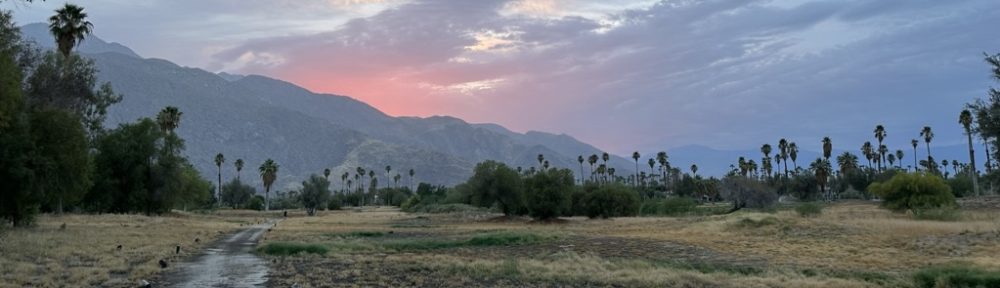
I’ve felt happy again. Often. Dancing to Louis Armstrong’s “Cool Yule,” even feeling self-conscious wondering if Ted or Frank happened to see me through the kitchen window. Stepping outside the gate to get the Sunday paper, I close the gate behind me and just stand there looking at our mountains. I study the rooflines of the new houses being built on the other side of our little road and think even their looming presence can’t bury the glory of our mountain view. My joy ignites watching the house finches in the tray feeder, quiet, stolen moments while the mourning doves are away. I get happy over small things. Grinning in the bathroom mirror after a shower, wrapped in warm, clean clothes against the cold, patting my fat belly with something akin to affection. I almost giggle with glee when I climb into bed to eat my mushroom, kale, potato soup and watch re-runs of Parenthood, cozy on a winter night. Oh, tidings of comfort and joy.
New Year’s, Too (40)
I don’t remember the noise of New Year’s Eve in Ajijic. But after October with the steady rotation of the statue of Guadalupe from church to church, rockets marking the progression every morning at 5am, and the two weeks of our saint’s festival, culminating in whole days of almost ceaseless explosions–not to mention having lived through the rainy season with the cascading thunder (!)–I am betting New Year’s Eve seemed quiet there in comparison.
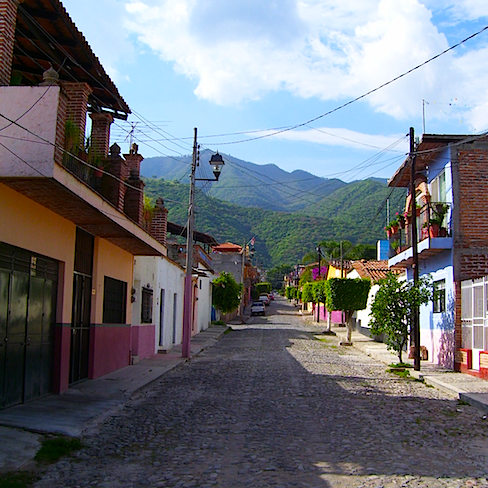
I do remember walking through the village on New Year’s Day, spying the evidence of street fires in every neighborhood. Everything was rather impressively cleaned up, no trash or half-burned logs or even big ashes left in the road from the last embers. But you could see the charcoal remains dusting the cobblestones every block or two, and you could feel the quiet, everyone asleep after the big night. Later I learned from Ana they would make tamales and have a fire in front of their own house on Zapata. They would stay up all night, eating and drinking and enjoying each other, the family, the neighbors, nearby friends. Staying up all night seemed to be part of the tradition, though I didn’t ask why. One truly greets the new year that way, I am thinking, more than only marking midnight.
Now every year I picture them together in the street on New Year’s Eve, the firelight dancing on brown faces, dark shining hair. I imagine Rodolfo has made his pipián, and there is a big metal pot filled with homemade tamales, and the corn husk wrappers pile up beside it as the night moves toward the dawn. I can almost taste the masa, can almost hear them singing. Happy new year, everyone.
La Milpa (18)
One time when I did say yes to Mexico, I got to visit Rodolfo’s milpa, the one south of the carretera, the highway, just west of Ajijic. We rode the bus together, Ana and Rodolfo and their daughters Isabel and Mariane and I. Milpa translate’s literally as cornfield, but Rodolfo grew other vegetables, too. They were all nourished by the nightly summer rains. Every year at harvest they had a gathering at his other milpa, north of the highway somewhere. They roasted elote over a big open fire, the corn in their husks, drank tequila, danced. I don’t know how I missed it, but it breaks my heart now to think I may have passed it up. I hadn’t been there long yet, so I maybe I was too shy, but I know I would have done anything to get there in that second summer. But I left that year when the corn was still growing.
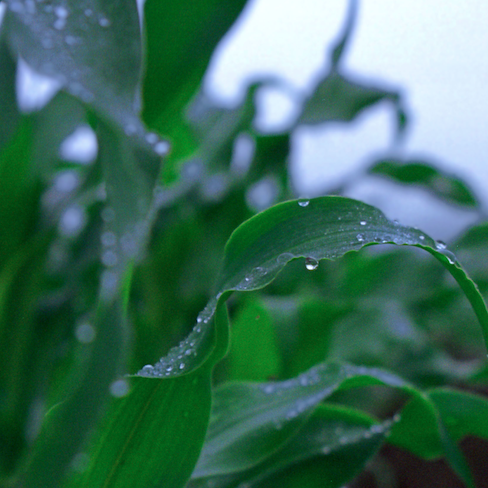
The milpa was a few blocks more to the south, between the carretera and the lake. We walked together on the country road in the late summer afternoon. I remember being transported when I followed Rodolfo through the rows of corn. They must have been twelve feet tall. It was another world inside them, all pale green light, moist earth and growing things. He brought us to a makeshift table in the distant heart of the field. Rodolfo picked a handful of pepinos, cucumbers, and washed them with a gallon of water he’d carried with him on the bus. He had a knife to slice them, and Ana produced limes and salt and chile. We ate pepinos picados in our little spot carved out from the forest of corn, and I remember being charmed and oh so grateful they had wanted me to come.
It began to rain, and I licked lime and salt from my fingers. We grabbed everything and ran down the road, laughing, the rain coming down in fat drops, pelting us as we ran. Rodolfo led us to a half-built home a block away. We stood in an unfinished room while the rain beat down on the metal roof, nibbling on brownies I had bought from a cafe in town and crunching crisp red apples. I have always loved the sound of rain on a metal roof, the smell of the first drops hitting dusty earth. I was glad for the water going to the milpa.
Rodolfo talked about the half-built home, abandoned now. It belonged to a friend of his, and when he looked around, I could see in his eyes the way he imagined it in his mind, picturing it fixed up, livable. But Ana only rolled her eyes. She was not eager to live in the country. Over my dead body, she might have said. But I could see it, too, the place restored, the dream of it. Rodolfo and I looked at each other and smiled. Who knew?
[Cornfield photograph cropped from the full version, © Tomo Yun at www.yunphoto.net/en/. Used with permission.]