Kicking into High Gear (17)

For this last week I’ve been struggling with wanting to get more done. Coming off of vacation is never easy for me, and now I have a week to get ready for the next semester. I tell myself, too, after this past summer when I fell so spectacularly apart, it’s been a long time since I worked steadily at my peak. Last semester I did what I needed to do and little else, letting myself retreat to Netflix or a book when those must-dos were done, glad to just be functioning at all, I think, and precarious in it. I tell myself now it isn’t fair to expect to be able to flip a switch, to begin doing not only all sorts of extra things, but to be doing them all quickly. And besides, I point out with a wry grin, it just ain’t happenin’. But I’m not giving up hope. And maybe this is a good experiment. Because I’ve never figured out how to get into high gear without engendering more stress than I want in my life. So, maybe if I keep making this transition like molasses, I’ll get where I want to be without bricks for shoulders. When I begin cataloging what I need to accomplish my body clenches, even though I know I’ll get it all done. Still, my mean voice mutters about all the other things besides schoolwork I’ve been neglecting, nags me about the weeds in the driveway, the dirt from the construction site that’s piled up on the little shelf in the shower where the spray doesn’t reach. My mean voice has a long list, but I don’t want to listen, don’t want to even let the voice live in me. I pause with my pen above the page, take in a deep breath, let it out again. I see the hunter green umbrella poking out above the back fence, a happy reminder my neighbors are back from Canada. I hear a house finch singing in their tree, but I can’t see him. I scratch my head, yawn, grin. I’m going to focus a bit more on my writing today, then move on to some school prep. I’m going to sneak up on this full throttle stuff, I tell myself, and find a way to keep my peace.

Tidings of Comfort and Joy (14)

I’ve felt happy again. Often. Dancing to Louis Armstrong’s “Cool Yule,” even feeling self-conscious wondering if Ted or Frank happened to see me through the kitchen window. Stepping outside the gate to get the Sunday paper, I close the gate behind me and just stand there looking at our mountains. I study the rooflines of the new houses being built on the other side of our little road and think even their looming presence can’t bury the glory of our mountain view. My joy ignites watching the house finches in the tray feeder, quiet, stolen moments while the mourning doves are away. I get happy over small things. Grinning in the bathroom mirror after a shower, wrapped in warm, clean clothes against the cold, patting my fat belly with something akin to affection. I almost giggle with glee when I climb into bed to eat my mushroom, kale, potato soup and watch re-runs of Parenthood, cozy on a winter night. Oh, tidings of comfort and joy.

My Palo Verde (11)

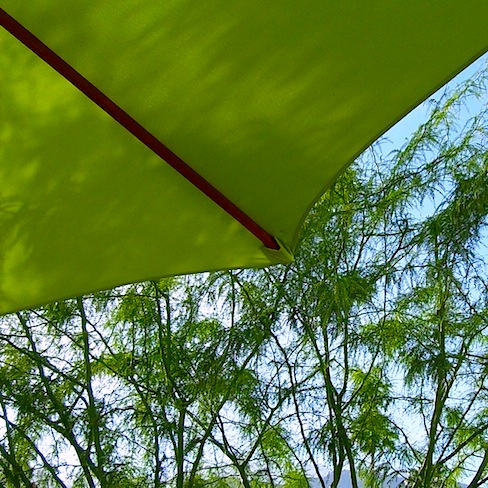
picture of palo verde with green umbrella

When they planted my palo verde before we moved into our new home, I prayed to know her name if she had one. Days later when I was weeding near her base I saw her name in my head. It was typed on thick white paper with pink and blue fibers woven through it. The lines were single-spaced, like part of a letter written on an old manual typewriter. Serena. Really? Serena? It wasn’t something I would have chosen. Then I heard it in my head, spoken with a Spanish accent, the long letter “A” sounds, the furred, rolled “R.” I liked it. She was in full bloom when they brought her, and she grew fast. The first fierce wind we had knocked her over, and I became hysterical. I’d never had my own tree planted in the ground before, only Christmas trees who lived in pots. Gus came and righted her, tied her up, but he said she was still too top-heavy. After, I bought a saw. I’ve been removing her limbs little by little, feeling like I’m cutting off my own arms, terror alive in me each time. The last time I had the wrong angle on the cut, had to go in again from the side, made a big gouge in her main trunk I haven’t forgiven myself for. I pray she’ll be okay, that her roots will grow deep and wide now, her remaining limbs thick and strong. I can see her tall and broad, our shelter from the summer afternoon, her branches filled with birds sitting quiet in the early evening. The first morning we lived here, a little yellow bird came to sit in her, tasting her tiny leaves (or maybe eating bugs I couldn’t see). “Ah,” I said. “You are nibbling on my companion.” It felt like a good omen, that visit. Yesterday I looked up and there were more than half a dozen goldfinch perched in her, their little calls and yellow bellies music on a winter day. My palo verde. My Serena. May you be blessed for long, luxurious decades. May you never lack for water, for company, for blue sky, for love.

The Thinning Veil (8)

This waiting to feel like myself again is mysterious, elusive. There are times when I forget I’m not yet normal, laughing on the phone with Colleen or glancing up from the computer to see the mountains spread before me, my fondness for our new home springing up. But other moments I feel flat, separate, behaving like the me I know but not feeling like her. There is still wonder everywhere. I know this. The big grasshopper on the sunflower, the mourning doves pecking at the fallen seed below the tray feeder, the roadrunner caught in the corner of my eye when I am working, the hummingbird alighting on the guava tree outside the window–gemstone through glass. A veil between us, I think, a muting of wonder. Unbelievably thin, subtle. Even the coyote watching me with his mouth full of raven, gossamer fluttering between us.

One More Sun Salute (7)

I am baffled by this thing of getting better, of becoming myself again. How do I get there? Will I know it, recognize me when I do? I am just past the simple laying down of small acts now, trusting they will become a path. But my premise remains the same. Do these four things every day: my morning writing, yoga, qi gong, some kind of exercise. Still a layering of small acts but more focused now. I used to do these things, believed in them. If I return to them, I am thinking, they’ll take me to myself again. Renewed vows based on faith, on hope, on prayer. Lead me home, I ask. At the same time, I know it’s unlikely I’ll be who I was when I find myself on the other side of this. How could I be? Sometimes I’m afraid there is no getting to the other side. Will these four things work their magic? Or am I only grasping at straws, their plastic weak, bending under my thumbs? I shake my head, as if I can knock doubt out my ears. One more sun salute, I tell myself, and I’ll be finished with today’s four things. I grab faith in my fists and bow forward.

The Boy with the Scary Skin (19)

I walk down my hill to the carretera, the highway, two short blocks from my home. I never have to wait long for a bus here in Ajijic, only five or ten minutes. But I have yet to be able to distinguish between the different buses from a distance, the one that turns at my corner and goes through town, the one that stays on the carretera. So I get nervous waiting. I am self-conscious flagging down the driver, boarding the bus. I feel conspicuous, the one estadounidense in the midst of the Mexicans whose world this is. I place my coins in the driver’s outstretched hand. “San Juan Cosolá,” I say, flustered, sure every eye is on me, certain the driver is only tolerating my foriegn-ness.

But once I find a seat toward the back and settle in, I begin to relax. I’m on one of my favorite outings, going to the next town over to indulge in the waters, the natural hot springs, the balnearios. The bus continues west on the highway, and I wonder if I’ll see the two little boys today. I have asked their names before but never remember them. I am bad with names. They are brothers or maybe neighbors, best friends. They are little, wiry, filled with restless energy. The one the other defers to, the oldest, I think, has a terrible skin ailment that covers his face. There are patches on his arms, his hands.

I give them coins because they do not demand them, do not treat me as though I must, as though it is their due, and I must be rich because I’m from the United States. Usually I give them 10 pesos each, maybe a little more or a little less, depending on whether or not I have remembered to prepare for them. Once I gave the one in charge a 200-peso bill, just less than twenty dollars. I asked him if he would share it with his mother. I believed him, his solemn nod. I could feel the shock of it in both of them, but they didn’t say a word, didn’t betray any emotion, only in the still way they held themselves did I know what it meant to them. Another time I was walking up the short hill to the highway on my way home when the bus appeared. I was too far away, but I started to run. The older boy saw me and raced hard for the bus. He got the driver to wait for me. I could have kissed him. And the sweetest thing was knowing he hadn’t done it for the coins. He was only being kind, generous. He would grow up to be a good man, I thought.

I waved to him as the bus pulled away, grateful and touched by his gesture, and aching for the kind of poverty he knew, the kind that left him stranded in his skin, his old soul eyes meeting mine as I left him behind.
Escape (10)

The air has been terrible for weeks. It brings back dim memories of smog-choked mountains from my first nightmare summer here, images I’ve told myself in the intervening years I must have misremembered or exaggerated in my own dark gloom. I check the air quality in the Los Angeles Times every morning, little colored circles, green, yellow, orange or red. We have been orange almost every day, “unhealthy for sensitive individuals.” Once we were even red, the only one, a danger for everyone, while the rest of southern California was green or yellow. It’s so bad it makes me not want to live here, has me back on craigslist combing for rentals, a part of me screaming inside to get away. Do I live near a nuclear power plant? Head for Blythe or Algondones? Can I trade this sun, this warmth I’ve become so spoiled by? They’ve been in the 60s at the beach all summer. It makes me shudder. (Oh, and yes, I realize summer has not yet actually begun, but we’ve been in the 100s for over a month already. It skews my perspective.)

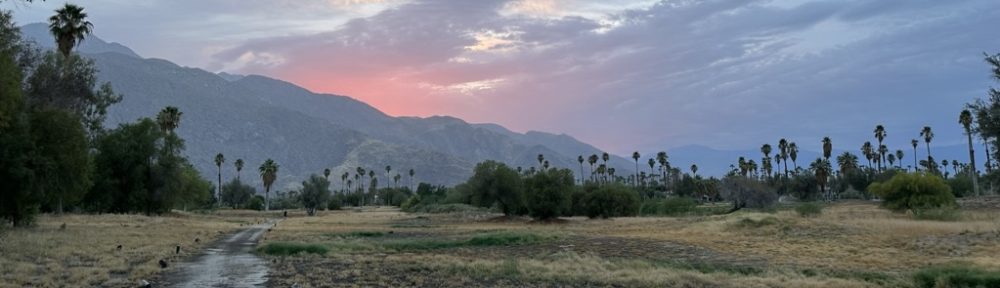
Can I live like this, with this foul air, if it’s only for a handful of months every third summer? In Ajijic it was the spring months that were bad. I arrived in April, shocked by the horrible air. They allow agricultural burning, so all the fields in Jalisco were turned to ash in preparation for the summer planting, and the smoke would gather above the lake, blotting out the mountains on the southern shore. Like here, people would gaze back at me, a blank look on their faces, when I lamented the smog. How can they not notice? It’s with me always, my body’s instincts on guard against it. My lungs take shallow breaths, as though they might reduce the damage. And our mountains, our glorious mountains that are a presence everywhere, are diminished by the smog. My eyes seek them out again and again throughout the day. But instead of their surprising nearness, their magnificence that makes my heart leap in my chest, they are made distant, dulled, lessened by the ugly air that clings to them.

view from kitchen, ridgetop and houses

view from kitchen, more ridgetop and houses

When I lived in Ajijic I imagined a life where I would escape each spring, moving the cats to Puerto Vallarta for April, May, June. Now I fantasize about escaping to Ajijic for July, August, September. Soon the cicadas will arrive in the village, if they aren’t there already, harbingers of the nighttime summer rains. I lived in the hills where the lightning clung, the thunder crashing close to our tile roofs in the middle of the night, like no noise I’ve ever known, the fierce roar of the gods. I’d lie on my back in the dark, my bedroom windows open to the north and east, the lightning bright behind my eyelids. I’d listen to the thunder’s echoes roll out across the lake below, the sound reverberating for long moments as it traveled across the basin. At some point the downpour began, rain racing off downspouts like Niagara Falls, making rivers of our steep streets. In the mornings the wet cobblestones would shine in the sunlight, all dust banished from our world. I’d look out my kitchen window to the nearby ridge, the crest of our hill. The air would be washed clean, too, in the brilliant summer light, the kind of sharp clarity that makes you want to launch yourself from the rooftop out into the blue sky, to take wing across our world.